

The Concept of Regenerative Agriculture İs Examined in the 19th Issue of on Ecosystem
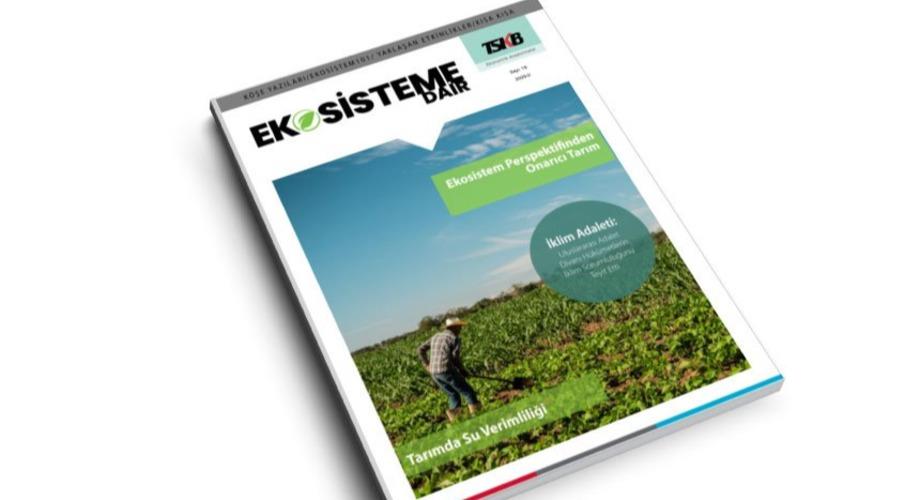
The 19th issue of Ecosystem, prepared by TSKB Economic Research, has been published. This issue discusses the risks faced by soil, which is the second largest carbon store after the oceans, and how regenerative agriculture can be a solution to combat these risks.
In the 19th issue of Ecosystem, published periodically by TSKB Economic Research, the important role of soil in ecosystems and the benefits offered by regenerative agriculture are put under the spotlight. Soil provides many important ecosystem services, especially carbon storage. Soil stores more carbon than the atmosphere and vegetation combined, traditional farming methodsand is at risk due to the use of chemical fertilizers. In this context, only the "sustainability" approach is not sufficient; Instead, it is emphasized that a "restorative" perspective should be adopted.
In this issue of Ecosystem, it is emphasized that increasing water efficiency in agricultural irrigation has become an inevitable necessity in a period when water stress comes to the fore and the impact of the ecosystem crisis is increasingly felt with extreme heat, drought and changing precipitation regimes. In addition, due to harsh weather conditions, there are a number of studies that discuss the impact of extreme weather events on food inflation.It is noted that frost events cause increases in fruit prices. The multidimensional effects of the ecosystem crisis are discussed, as are current developments such as the EU's target of reducing emissions by 90% by 2040 and the 2.6–3.1°C temperature increase predicted by UNEP for 2100. In addition, carbon credits can be used to combat the ecosystem crisis and close the financing gap.International developments such as its potential and COP30 to be held in Brazil in November 2025 are among the prominent topics of the magazine.
The highlights of the 19th issue of Ecosystem are listed as follows:
- Carbon credits produced through regenerative agriculture have significant potential in terms of both carbon storage and side benefits to the ecosystem.
- Modern irrigation methods stand out in increasing water efficiency in agricultural irrigation. In this way, water savings of up to 35% (sprinkler) and 65% (drip) can be achieved. According to DSI data, an average of 3.75 liters of water is consumed per hectare per hour in surface irrigation, and 1.25 liters of water is consumed in sprinkler and drip systems.
- Extreme weather events feed upside risks to food inflation by both causing short-term negative supply shocks and increasing transportation costs.
- The European Commission has proposed a target to reduce greenhouse gas emissions by 90% from 1990 levels by 2040.
- The 2025 United Nations Climate Change Conference, COP30, will be held in Belém, Brazil, between 10-21 November this year. It is expected that countries will complete their National Contribution Declarations updates in September before the conference.
- Forest financing fell behind the need with an average annual level of 6 billion dollars in the 2021-2025 period.
- Climate Change Presidency Published Draft Texts Regarding Türkiye Emission Trading System (ETS) and Türkiye Carbon Crediting and Offsetting (TR KDS) Regulations. With ETS, greenhouse gas emissions resulting from certain activities will be monitored, reported, verified and reduced with a market-based system. TR KDS is a carbon system for the reduction and elimination of greenhouse gas emissions that are not included in the scope of ETS.It will enable the production, recording, verification and trading of loans.
- You can access the 19th Issue of Ecosystem from the link. https://www.tskb.com.tr/uploads/file/ekosisteme-dair-2025-ii.pdf