

A new era in technological transformation: What path should Türkiye follow in manufacturing?
Technology is no longer merely a tool for increasing production capacity; it has become a fundamental factor shaping the economic growth, international competitiveness, and employment structure of nations. This transformation—spanning everything from artificial intelligence and semiconductors to critical minerals and clean energy technologies—is creating new arenas for competition within the global economy.
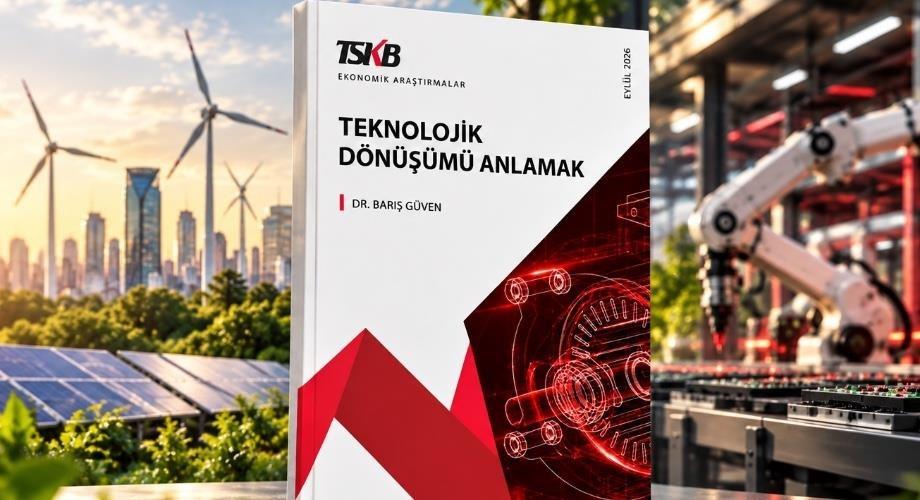
However, success in this race depends on more than just developing new technologies; it is equally important to diffuse the productivity gains driven by these technologies throughout the broader economy. The Economic Research department of the Industrial Development Bank of Turkey (TSKB) addresses this shift in its report, "Understanding Technological Transformation," which evaluates both the opportunities and risks for Turkey.
While high-tech production in Türkiye is on the rise, its overall share remains limited.
A notable trend has emerged: high-tech production is growing faster than the manufacturing sector as a whole. Between 2010 and 2025, real output in the manufacturing sector grew at an average annual rate of 5.5%, whereas high-tech production saw an average annual growth rate of 11.5%. This disparity indicates an expansion in production capacity.
Nevertheless, growth rates alone do not fully capture the level of technological advancement. If the initial share is small, even robust growth may not be sufficient to alter the overall industrial structure. In fact, as of 2025, high-tech products accounted for only 3.6% of total sales, and the foreign trade deficit persists.
Türkiye faces two primary objectives: first, to increase the production of high-tech goods and their weight within the economy; and second, to enhance the technological capabilities of existing industrial enterprises, thereby achieving greater efficiency in their production processes. The effects of technological transformation are not confined to specific sectors; the extent to which this growth spreads across other sectors is equally significant.
Why is technological transformation more than just new inventions?
Policy decisions often focus on developing new products, increasing research investments, or gaining a competitive edge in high-tech fields. A report by TSKB, however, highlights another crucial aspect: the diffusion of existing technologies throughout the broader economy is just as important as the creation of new ones.
In economic literature, this process—known as "technology diffusion"—refers to a technology moving beyond the institutions that first developed it and being adopted by various other businesses and sectors. For instance, while a large industrial firm transitioning to AI-powered production planning represents a form of technological progress, the adoption of similar solutions by small and medium-sized enterprises (SMEs) further amplifies the impact of this transformation.
Consequently, technology policies should encompass not only companies that drive innovation but also businesses that seek to adopt and utilize technology. Key components include the workforce acquiring new skills, the strengthening of digital infrastructure, and improved access to technology for businesses. Ensuring that productivity gains become both lasting and widespread requires addressing technology development and technology diffusion in tandem.
Artificial intelligence is spreading faster than other digital technologies.
The proliferation of artificial intelligence is the most significant development altering the pace of technological transformation. AI technologies are being adopted at a much faster rate than computers or the internet were during their respective periods of widespread adoption. This shift compels companies to re-evaluate how they operate across a range of areas—from production and customer service to software development and data analysis. While artificial intelligence facilitates the automation of repetitive tasks, it also enables the processing of vast amounts of data and accelerates decision-making processes. However, the economic contribution of this technology does not depend solely on the adoption of software. It also requires organizations to redesign their business processes, employees to acquire the skills necessary to utilize new tools, and the technology to be applied in the right areas.
Another significant issue is the global concentration within the artificial intelligence ecosystem. Developing advanced AI models, manufacturing the chips that power them, and establishing data center infrastructure require substantial capital and technical capacity. As artificial intelligence becomes more widespread, its core components may end up concentrated in a limited number of countries and companies.
This situation can create new dependencies between the nations that use the technology and those that develop its underlying infrastructure. For Turkey, the challenge is not merely to expand the use of AI applications; it is also essential to develop the human capital, technical competencies, and production capacity required to support these applications.
How might artificial intelligence transform employment?
The impact of artificial intelligence (AI) on the workforce lies at the heart of discussions surrounding technological transformation. According to a TSKB report, approximately one-fifth of global employment could be affected by generative AI. However, this figure does not necessarily imply a corresponding scale of job losses.
While AI automates certain tasks, it also alters the way work is performed across various professions and drives demand for new skills. The report emphasizes that this transformation will not affect all employees to the same degree. Notably, there is a high proportion of female workers in sectors where generative AI can be directly applied, which underscores the gender dimension of this technological shift.
Furthermore, the observed decline in employment among the 22–25 age group necessitates an assessment of the risks faced by those newly entering the labor market. These findings indicate that technology policies cannot be considered in isolation from education and employment policies.
The social outcomes of this transformation will depend on how well employees can develop their skills, adapt to new technologies, and receive support during professional transitions. In particular, ensuring that young people have opportunities to gain work experience—and that women can participate in the technology-driven transition on equal terms—will help distribute the benefits of increased productivity more broadly.
The focus of global investment is shifting toward strategic technologies.
As technological transformation reshapes production methods, it also influences the investment preferences of international capital. Artificial intelligence, semiconductors, critical minerals, and clean technologies are becoming increasingly significant in the global competition for investment.
One of the most striking data points in the TSKB report illustrates the magnitude of this shift. The share of strategic sectors—encompassing artificial intelligence, semiconductors, critical minerals, and clean technologies—within total greenfield investments rose from 16 percent in 2020 to 44 percent in 2025. This five-year increase signals a significant strengthening in the weight of technology-oriented sectors within new investment projects.
A "greenfield" investment refers to the establishment of a new facility or operation, rather than the acquisition of an existing business. Such investments are significant in terms of production capacity, employment generation, and technology transfer. Consequently, capital directed toward strategic technologies influences the industrial policies of countries seeking to attract investment.
However, an increase in investment volume does not automatically guarantee technological gains. For these investments to be truly beneficial, they must foster linkages with local suppliers, create high-quality employment, and facilitate the diffusion of knowledge throughout the economy. Türkiye’s competitiveness depends not merely on its capacity to attract investment, but on its ability to derive long-term technological capabilities from those investments.
Why are critical minerals and clean technologies considered together?
By grouping critical minerals and clean technologies within its framework of strategic technology areas, TSKB highlights the intrinsic link between technological transformation and sustainability. Electric vehicles, energy storage systems, and renewable energy infrastructure all rely on specific minerals and advanced manufacturing technologies.
The transition to clean energy entails more than just reducing the use of fossil fuels; the production of new energy technologies necessitates the development of entirely new supply chains and industrial capacities. Furthermore, the extraction, processing, and transport of the raw materials required for these technologies carry significant environmental and economic implications. The security of supply for critical minerals, material efficiency, and recycling capacity are becoming increasingly significant topics. A report by TSKB identifies critical minerals and clean technologies as strategic areas that are shifting the direction of global investments. In this context, for Turkey, strengthening resource efficiency, the use of secondary raw materials, and circular economy practices is just as important as developing the production of clean technologies.
However, the environmental benefit of clean technology investments cannot be measured solely by the amount invested. The energy and material requirements of production processes, the lifespan of products, and the possibilities for recovery at the end of a product's life cycle are all crucial from a sustainability perspective. Ensuring that technological transformation and the green transition progress in tandem depends on these impacts being taken into account during production and investment decision-making.
What priorities stand out in Türkiye's technology policy?
The TSKB report indicates that no single policy instrument will suffice. While increasing high-tech production is important, it is also necessary to facilitate the diffusion of technology across other sectors, prepare the workforce for this transformation, and generate greater economic value from strategic investments.
The first priority is to more effectively integrate the growth in high-tech production into the broader industrial structure. Despite high growth rates between 2010 and 2025, the fact that this sector’s share remained at 3.6 percent in 2025 highlights this need. Beyond production capacity, there is a requirement for a focus on research, design, a skilled workforce, and supply...
How does the value of technological advancement translate into the economy?
As the pace of technological transformation accelerates, the core issue for nations is not merely how quickly they adopt new technologies, but how effectively they generate value from them. The proliferation of artificial intelligence, the growth of high-tech manufacturing, and an increase in strategic investments are significant developments. However, for these processes to yield positive outcomes in terms of economic productivity, employment, and sustainable production, they must be supported by complementary policies.
A report by TSKB Economic Research indicates that while high-tech manufacturing in Türkiye has shown strong growth, its share of total production remains limited. The report also highlights the varied impacts of artificial intelligence on the workforce and the shift in global investment toward strategic technologies. The overarching message from these findings is clear: technological transformation is not limited to the use of more advanced machinery or more powerful software.
The success of this transformation depends on the diffusion of technology throughout the industrial sector, the ability of the workforce to adapt to new conditions, and the contribution of investments to long-term production capacity. This brings us to the fundamental question for Turkey in the period ahead: How can the growth in high-tech manufacturing be channeled into a broader transformation that permeates the entire economy, supports employment, and ensures a more efficient use of resources?