

Blog
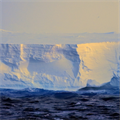
The world's largest iceberg is broken
By moving with ocean discharges in 2020, weddell started to break the western part of the sea, the last year, as well as the largest iceberg A23a in the room of scientists. British Institute of Antarctica Studies (BAS) Vice President of the Department of Pole Oceans Dr. Andrew Meijers quickly separated parts of the ice mountain and this spark...
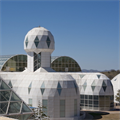
What does closed ecosystems teach us?
Climate change is one of the most critical issues of our era. Science emphasizes that the planet is increasingly faced with more ‘disable threshold’ points, applying for new methods to understand nature and see the future. One of these methods is human-made biospheres: huge closed systems that aim to recreate ecosystems under controlled conditions. Arizon...
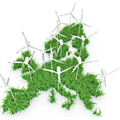
European wind board power reached 291 GW
According to the report of the European Power Union WindEurope, the European wind energy board power increased approximately 6.8 gigavat in the first half of the year. 6 gigawatts of this increase consisted of 89 percent rising terrestrial wind energy, 741 megawatts of sea top (offshore). The increase in the European wind energy board power 5.3 gigantic European Union (EU)...
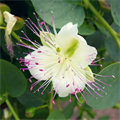
How did you know Kapariyi?
There are some plants in nature, it grows quietly, but it gives life to its surroundings with its presence. Kapari is one of them. This durable plant, which can be rooted even in the soils that are rocky and water-retardant, not only eat nature; the flavor of our tables adds value to the economy and diversity to ecosystems. In an increasingly increasing era of climate crisis, droughts and erosion, species such as capari are actually ...
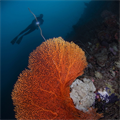
Will save the future of corals
Coral reefs in marine life are very important. The International Coral Reefs Initiative (ICRI) leads Saudi Arabia to the new era, and the goal is to cover the coral reef close to 90 percent of the world up to 2027. In this context, protection and restoration works are now limited to classical methods, supported by advanced technology. For half a million coral columns in Florida Keys...
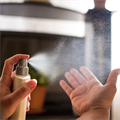
Silent pollutants of the air in the house Home
Every morning at the beginning of the day, we take a hairdryer, a little brightener or shape with a straightener. These small steps that become a natural part of our daily care routines bring us a danger that doesn’t actually look if they feel better. Recent research, cosmetic products and heat-based devices are much more dirt than we think about the air of our home...
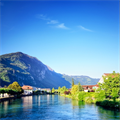
How to clean Swiss rivers?
Switzerland once has the most polluted rivers of Europe, today it shows example with the waterways of our tertemiz, which is referred to as ‘blue gold’. When it is dangerous to swim in these rivers, filled with raw sewage and industrial waste in the 1960s, people are able to enter the water even in the city centers. This conversion is not only with strong environmental laws, investments that last decades and...
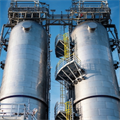
The world’s first carbon tomb was launched
The Northern Lights plant, established in Norway, is stored in the depth of 260 meters of the North Sea, the carbon dioxide collected from Europe
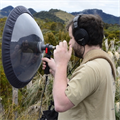
From sight to science
The visual disabled audio designer Juan Pablo Culasso offers a different way to understand nature by registering bird sounds for more than 20 years.
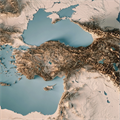
Digital twin blue future
METU’s artificial intelligence-supported “Black Sea Digital Twin” with climate, fishing, energy and pollution, and sustainable marine management is targeted.
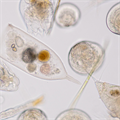
We produce half of the world's oxygen planktons
The planktons dancing with sunlight on the surface of the oceans play not only the sea creatures, but also the head of people to continue their life. These creatures that are not seen with eyes are unable to remove carbon dioxide in the atmosphere, produce oxygen and create the first ring of the food chain. However, climate change narrows the living areas of planktons and leads to severe decline in numbers. Where to plan...
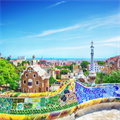
Climate change threatens ‘World Heritage’ cities
Climate change according to UNESCO threatens the Mediterranean World Heritage cities with extreme weather events such as hot air waves, flood and drought.