


Why do some plants gain advantage when soil is broken?
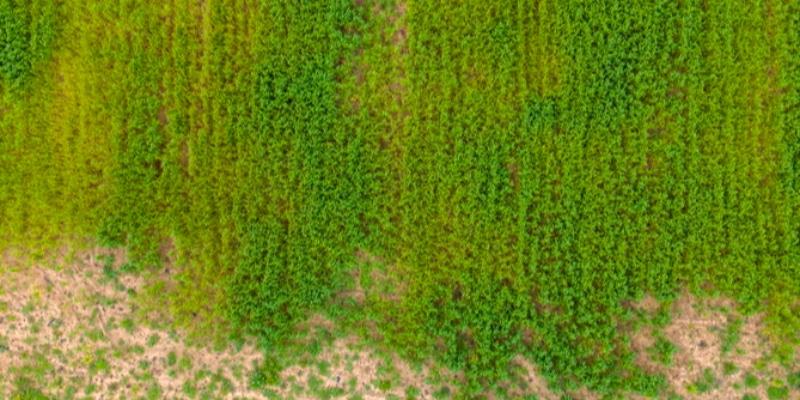
Plants do not only struggle with temperature and precipitation conditions in a field. It also competes with other plants for the field of light, water, nutrients and grow. Therefore, the structure of the built-in vegetation can directly influence what types become dominant.
Multiple years of plants can live more than one year in the same field. Thanks to advanced root systems and permanent vegetation, they continue their assets for a long time. Single-year plants complement their life cycle in a single growth period. The speed is growing, producing seeds and spreading in a short time when appropriate conditions occur.
The researchers examined the effect of physical intervention by removing plant cover in the fields of meadow and processing the soil in a shallow way. The results show that this intervention can weaken the advantage of the built-in multi-year plants.
In other words, a new gap arises when the existing vegetation is damaged. One-year species with fast growing and short life cycle can benefit faster than this space. [[T]]]
One of the points of attention to the research should not create a strong change to the same extent of fertilization. The findings indicate that in the spread of single-year plants, not only adding more nutrients to the ground, the deterioration of the physical structure of the vegetation can also be decisive. [
[
Why is it important to spread single year plants?]
The increase of single-year plants does not mean an ecological crisis per itself. These types can contribute to the re-plant cover of broken areas and react quickly to changing environmental conditions.
However, the main point of research is the change of balance between one year and multi-year species.
Long-life multi-year plants play a role in the permanent structure of the meadow ecosystems with developing root systems throughout the years. Continuity of plant cover is closely connected with this life strategy, long-term relationships between soil and plants and the functioning of the ecosystem in time.
Therefore, it can not only mean the change of the landscape or type list, taking the place of multi-year plants. The researchers indicate that this transformation can indicate loss of long-term ecosystem functions. [
Physical intervention in the new experiment almost doubled the ratio of single-year types. The relative cover of these types increased more than two floors. The more striking finding was not limited to hot and drought areas where exchange is only common for single year plants.
In fact, the climate conditions that these types can become dominant have been moved to a much wider area.
Human intervention can expand the climate limits of plants]
In natural conditions, the presence of single-year plants is associated with climates where hot and dry summers are seen. Climate is one of the basic elements that determine which life strategy will gain advantage.
]
However, the results obtained from 37 areas indicate that physical intervention can change this relationship. According to the study, the intervention was almost three times expanded the climate area, where single year plants can be met.
Important. Because it may not always be enough to explain the spread of a plant in a certain region, just saying “the more convenient now”. [
Physical disruption of the soil or removal of existing vegetation can change the conditions of competition between species. Thus, the only annual plants can gain advantage in climates where they become dominant in natural conditions.
It determines the general conditions that climate plants can live. However, research indicates that the human intervention may affect what plant group will stand out in these conditions.
The use of the land also appears when change[[[ T27]
]
Temperature and precipitation changes are usually ranked first while assessing the future of ecosystems. Climate models help us understand how much heat or how precipitation patterns can change.
But plant communities do not react to climate change in an empty terrain. The interventions such as physical removal of agriculture, soil processing and vegetation can also be effective on the same ecosystem.
The main thing the new research revealed is exactly here. When a space is exposed to both changing climate conditions and physical human intervention at the same time, the reaction to the vegetation will not only be predicted from temperature or precipitation data.
This situation gives new questions especially to understand the future of the meadow ecosystems. It can also affect the current forecasts on which the single-year species can be met in larger climate areas, where many years of vegetation and which speed can be recovered.
The study is yet pre-printing. In other words, the findings are not the results of a final scientific article past the arbitrator assessment. That’s why it’s early to review research as evidence of a precise global transformation. [
However, the experiment covering 37 meadows pointed to a strong point: it may not be enough to understand the future of the vegetation only by looking at the climate. When shaping the climate limits, human intervention can change which types will gain advantage in these limits. [
Sources:
Niv DeMalach and others, Anthropogenic Poles expands the span limits of annual plant dominance (2026); King’s College London, research publication record (2026).
Source: Ecosystems