


COP31
COP31 Weekend Highlights
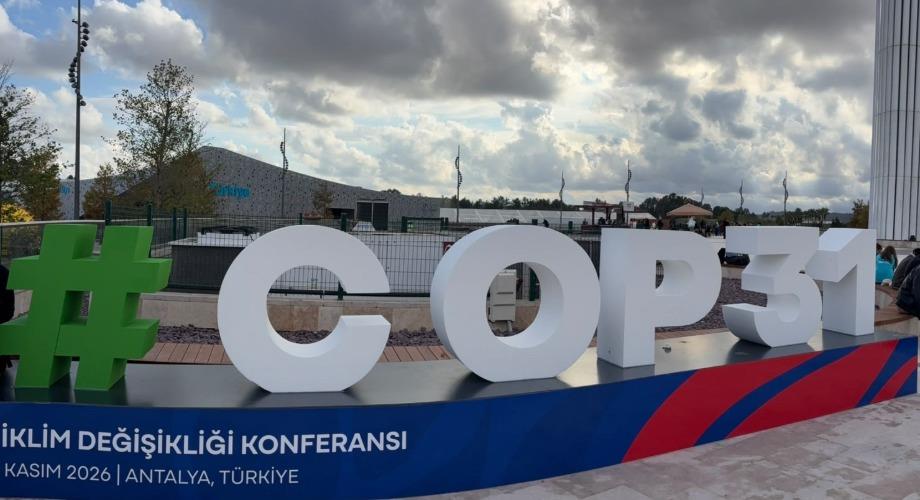
The first week of COP31, which continues in Antalya, concluded with discussions on climate finance, energy transition and climate change adaptation. Between 13 and 15 November, countries focused on the implementation of financing targets and new cooperation mechanisms.
Throughout the weekend, new initiatives were brought to the agenda in various areas, while negotiations on adaptation finance, transitioning away from fossil fuels and just transition continued. As the summit enters its second week, ministerial-level discussions are expected to play a decisive role in shaping common decisions.
Adaptation Finance Emerged as a Key Topic in Negotiations
Towards the end of the first week of COP31, the amount and terms of financing for climate change adaptation became one of the key topics in negotiations between countries.
Developing countries, in particular, emphasized their need for additional resources to strengthen their infrastructure, agricultural systems and settlements against increasing climate risks.
African countries brought forward their calls to increase annual adaptation finance to USD 120 billion by 2035. However, no common approach has yet emerged on how this target will be reflected in COP31 decisions.
Discussions focused not only on the amount of financing but also on the terms under which it would be provided. In particular, the balance between grants and loans remains an important consideration for developing countries' access to finance.
Simon Stiell, Executive Secretary of the United Nations Framework Convention on Climate Change (UNFCCC), also emphasized that financing instruments should be assessed by taking into account the different needs of countries.
These discussions highlight that climate finance is not only about increasing available resources, but also about directing existing financing appropriately towards areas where it is most needed.
The Role of Electrification in Emissions Reduction Was Assessed
Energy transition was another prominent topic between 13 and 15 November.
One of the targets addressed at COP31 is to increase electricity's share of global final energy consumption to 35% by 2035. This target involves not only increasing electricity generation from renewable sources, but also expanding the use of electricity in transport, industry and buildings.
Climate TRACE's Aiming Higher report, dated 13 November 2026, assessed the emissions reduction potential of different electrification scenarios.
According to the report, the baseline approach could potentially reduce greenhouse gas emissions by 4.1 billion tonnes of CO₂ equivalent annually, while a more comprehensive transformation scenario could achieve annual reductions of 7.9 billion tonnes of CO₂ equivalent.
These figures represent potential impacts calculated under specific assumptions, rather than emissions reductions already achieved.
The contribution of electrification to climate targets is closely linked to increasing the share of clean energy sources in electricity generation and making the necessary infrastructure investments.
Proposals for Transitioning Away from Fossil Fuels Remained on the Agenda
Negotiations on the process of transitioning away from fossil fuels continued towards the end of the first week of COP31.
Brazil put forward a voluntary roadmap proposal intended to support countries in planning their energy transitions.
A proposal to hold a separate international conference focusing on the transition away from fossil fuels was also discussed.
These initiatives aim to strengthen international cooperation on energy transition. However, they do not yet constitute binding decisions adopted under COP31.
Differences in countries' economic conditions, energy systems and transition capacities continue to affect efforts to establish a common approach.
For this reason, transitioning away from fossil fuels is expected to remain one of the key negotiation topics during the second week of the summit.
Financing to Reduce Methane Emissions
International initiatives to reduce methane emissions were also part of the weekend agenda.
Although methane remains in the atmosphere for a shorter period than carbon dioxide, it has a stronger warming effect in the short term. Therefore, reducing methane emissions is important for efforts to limit near-term temperature increases.
Turning financial commitments into tangible results depends on how resources are allocated to specific projects and how implementation is monitored.
It is also important to note that announced commitments do not necessarily represent financing that has already been provided.
Clean Energy Investments in the Mediterranean
Regional energy cooperation also emerged as a prominent topic during the first week of COP31.
Under the European Commission's T-MED initiative, the aim is to mobilize EUR 25 billion in investment across the Mediterranean region by 2035.
The initiative is significant in terms of developing clean energy infrastructure and strengthening regional energy interconnections.
Enhanced cooperation among Mediterranean countries in the energy sector could contribute to more effective use of renewable energy resources and support the energy transition.
However, the EUR 25 billion figure represents the targeted amount of investment to be mobilized, rather than investments already completed.
Financing Remains a Key Issue in Just Transition Mechanisms
The impacts of the energy transition on workers and local communities were among the topics addressed during the first week of COP31.
The just transition approach aims to consider employment, social protection mechanisms and economic opportunities together throughout the transition to a low-carbon economy.
Countries continued discussions on the structure of international cooperation mechanisms that will support just transition policies.
However, no common approach has yet emerged regarding the financial resources that will support these mechanisms.
Uncertainties surrounding financing remain among the factors that could affect the implementation capacity of new mechanisms.
As COP31 Enters Its Second Week
Developments during the 13–15 November period of COP31 once again highlighted the central role of finance in implementing climate targets.
Calls for increased adaptation finance, the emissions reduction potential of electrification and new commitments to address methane emissions were among the key topics of the first week.
Nevertheless, a significant proportion of the announced initiatives remain at the negotiation or implementation stage.
Ministerial-level discussions are expected to intensify during the second week, beginning on 16 November. How decisions on climate finance, transitioning away from fossil fuels and just transition mechanisms will take shape will form the main agenda for the remaining days of the summit.
The key question in the second week of COP31 will be to what extent countries can translate their differing approaches to financing and implementation into common decisions.
Resources
- Climate TRACE, Aiming Higher, 13 November 2026.
- Climate Change News, COP31 Bulletin Day 6, 14 November 2026.
- The Planet Brief, COP31 Day 5–6 Roundup, 13-14 November 2026.
- Cyprus Mail, COP31: What Has Been Achieved So Far, 16 November 2026.
- SWI swissinfo.ch, Second Week of COP31: Tough Negotiations Ahead, 16 November 2026.
Source: https://cop31.tr