


What do you say to meet Fitoplanktons?
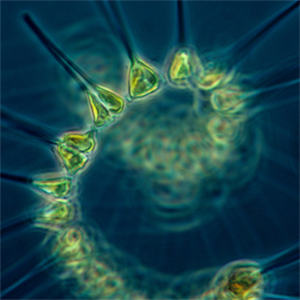
Fitoplankton, microscopic organisms living in the oceans, lakes and rivers. These organisms contain many different types of cyanobacteria, also known as blue-green algae, surrounded by glass-like structures, diatoms and calcium carbonate armor. Prochlorococcus, the smallest and most abundant phytoplankton species, but discovered in 1980s. A teaspoon of ocean water can be found in several thousand phytoplankton.
role in the carbon cycle
Fitoplanktones play a major role in the natural carbon cycle by taking carbon dioxide (CO2) in the atmosphere. Through photosynthesis, they convert CO2 and nutrients into carbohydrates using solar energy. These carbohydrates create building blocks of phytoplankton cells and thus help balance the carbon cycle on the world. [
The importance in the chain
Fitoplanktones are the basis of aquatic nutrients networks. Microscopic grasslets are eaten by zooplanktons and these zooplanktons are also source of nutrients for fish and other marine creatures. When Fitoplanktones die, and together with deaths or stools of other living creatures in the food chain, a part of the carbon, where they get, sinks deep into the ocean. This process is called biological pump and plays an important role in the carbon cycle of the world.
A relationship with change
Fitoplanktons have to live close to the ocean surface to capture solar energy. But most of the nutrients needed for growth are found in the deep ocean. When it comes to deep water surface with strains or discharges, large quantities of phytoplankton can grow and these masses can be seen from space. Climate models predict that increased temperatures will change the ocean discharges and the stability of the upper ocean and therefore reduce the supply of nutrients from the deep ocean. This situation can lead to less phytoplankton in the world and can leave more CO2 in the atmosphere as a result of slowing the biological pump. This contributes more to climate change.
The variety ofFitoplanktones
Fitoplanktones are extremely diverse and possibly contain 100 thousand different types. This variety allows them to perform different roles and functions in their ecosystems. For example, some phytoplankton types grow faster than others, some can better adapt to certain nutrients or environmental conditions.
[
The future ofFitoplanktons]
]The future of Fitoplanktons depends on many factors such as climate change and chemical balances of oceans. warming and acidizing of oceans can affect phytoplankton populations and variety. Therefore, understanding and maintaining the effects of phytoplanktons on ecosystems have critical importance for our future environmental health.
The variety of Fitoplanktones can better understand how important these microscopic organisms are for our planet, knowing about the effects on the carbon cycle and climate change.
Source: Ecosystems