


UNICEF: Climate crisis deepen training crisis
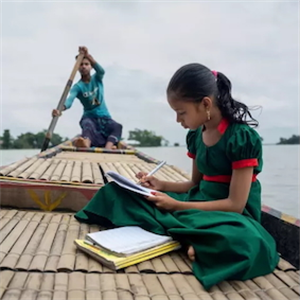
The United Nations Help Fund for Children (UNICEF) published a report on the influence of climate crisis to education. In the report, hot air waves, tropical cyclones, storms, floods and drought are noted that this situation is further deepened the ongoing training crisis.
Schools closed hot air waves
[[T]]In the report recorded that the most common climate hazard led to the closing of schools in 2024 is hot air waves, only in April the 118 million students were affected by this situation. In the report, at least 85 countries in 2024, the education of 242 million students was interrupted due to extreme climate events, the South Asia’s climate-source educational interruptions were most affected and had to seek out the education of 128 million students. [
[
In training climate-based financial investments insufficient[
In the report taken into account about 74 percent of the students affected by extreme climate incidents are located in low and sub-medial countries, on the other hand, no region is completely exempt from this situation. In the report, the severe precipitation and floods in Italy in September 2024 led to the education of more than 900 thousand students, in October, 13 thousand children were stopped in Spain.. In the report that schools and educational systems are greatly insufficient about the protection of students, climate-based financial investments remain surprisingly low in the field of education, and due to climate hazards, global data is limited to disruptions in schools.
"Kids are more vulnerable"
The UNICEF Executive Director Catherine Russell, which is included in the expressions of the radio: “The children are more powerful and more often seen in hot weather waves, storms, droughts and floods are more vulnerable to the effects of air conditions. Children's bodies are uniquely sensitive. Because children bite faster, less sweats and slower than adults. Children can not focus on lessons in classes that do not provide protection against hot air wave. It will also not be possible to reach school if the roads remain under water or are destroyed by schools. Severe weather events last year threatened both health and security as one of the 7 students could not go to the lesson, and affected long-term education.” Russell stated that the education is one of the most frequent downtime services due to climate hazards, climate policies are often ignored in discussions.
Schools closed hot air waves
[[T]]In the report recorded that the most common climate hazard led to the closing of schools in 2024 is hot air waves, only in April the 118 million students were affected by this situation. In the report, at least 85 countries in 2024, the education of 242 million students was interrupted due to extreme climate events, the South Asia’s climate-source educational interruptions were most affected and had to seek out the education of 128 million students. [
[
In training climate-based financial investments insufficient[
In the report taken into account about 74 percent of the students affected by extreme climate incidents are located in low and sub-medial countries, on the other hand, no region is completely exempt from this situation. In the report, the severe precipitation and floods in Italy in September 2024 led to the education of more than 900 thousand students, in October, 13 thousand children were stopped in Spain.. In the report that schools and educational systems are greatly insufficient about the protection of students, climate-based financial investments remain surprisingly low in the field of education, and due to climate hazards, global data is limited to disruptions in schools.
"Kids are more vulnerable"
The UNICEF Executive Director Catherine Russell, which is included in the expressions of the radio: “The children are more powerful and more often seen in hot weather waves, storms, droughts and floods are more vulnerable to the effects of air conditions. Children's bodies are uniquely sensitive. Because children bite faster, less sweats and slower than adults. Children can not focus on lessons in classes that do not provide protection against hot air wave. It will also not be possible to reach school if the roads remain under water or are destroyed by schools. Severe weather events last year threatened both health and security as one of the 7 students could not go to the lesson, and affected long-term education.” Russell stated that the education is one of the most frequent downtime services due to climate hazards, climate policies are often ignored in discussions.
Source: Announcements