


The Second European Ureyen Bird Atlas Published
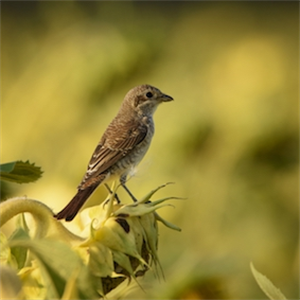
The second European Ureyen Bird Atlas published. The study prepared with the participation of hundreds of thousands of birds observers is among the widest range of citizens science projects on biological diversity. The study was released in 1997 and released after the first European Ureyen Bird Atlas, prepared with the data collected from the 1980.
The use of the husband affects the ecosystem
[[T]]According to the results, it currently takes about 596 birds in Europe. 35% of the breeder birds in Europe have increased in the last 30 years, 25% of the reproductive area was narrowed. The growing area of breeding is the species protected within the scope of the international agreements of the winning birds. The reproductive area is narrowed, there are a large number of species connected to agricultural areas. The main causes of changes in the spread areas of urea birds according to the study are changes in the use of land and climate change. [
[
]Effective agricultural activities[
313 of the breeder birds in Europe are in Turkey. This number, showing the high biodiversity value of Turkey, is a reflection of the variety of different geographic zones to us. The second European Ureyen Bird Atlas is a specialist in Catalan Ornithology Institute of coordinators, Herrando attracted attention to the fact that the number of breeders in the north of Europe is increased, while it is reduced in the south. According to Herrando, the most boiling habitats of breeders in Europe are planted in the Mediterranean region. The main reasons for this are changes in climate change and land usage. Due to intensive agricultural activities in populations of bird species connected to agricultural areas, there is a decline. The spread area of a large number of birds boils towards the north, the species of forest birds is increasing. In the report, a large number of species, which is the priority of protection in Europe, is taken into account that there are examples that indicate that nature protection works. For example, ak-tailed cardal protected by international contracts (Haliaeetus albicilla) increased the spread area in Europe.
[
Corn living spaces provide advantage
The Turkish Ureyen Bird Atlas Coordinator Kerem Ali Boyla, who was prepared with the contributions of the WWF-Turkey (Natural Life Protection Foundation), noted that some species that decreasing numbers across Europe have healthy populations in our country: “The populations of some common species were severely reduced, as a result of changes in agriculture and forestry applications, due to the transition to the European Union in part. Species such as stepper (Streptopelia round), field bird (Alauda arvensis), red ridge spiderbird (Lanius collurio) and cherries (Emberiza hortulana) are still plenty of in our country and are widely timid. We owe this to the presence of wild grasses grown in field edges, small-scale agricultural production systems that still continue in our many regions. ”
The use of the husband affects the ecosystem
[[T]]According to the results, it currently takes about 596 birds in Europe. 35% of the breeder birds in Europe have increased in the last 30 years, 25% of the reproductive area was narrowed. The growing area of breeding is the species protected within the scope of the international agreements of the winning birds. The reproductive area is narrowed, there are a large number of species connected to agricultural areas. The main causes of changes in the spread areas of urea birds according to the study are changes in the use of land and climate change. [
[
]Effective agricultural activities[
313 of the breeder birds in Europe are in Turkey. This number, showing the high biodiversity value of Turkey, is a reflection of the variety of different geographic zones to us. The second European Ureyen Bird Atlas is a specialist in Catalan Ornithology Institute of coordinators, Herrando attracted attention to the fact that the number of breeders in the north of Europe is increased, while it is reduced in the south. According to Herrando, the most boiling habitats of breeders in Europe are planted in the Mediterranean region. The main reasons for this are changes in climate change and land usage. Due to intensive agricultural activities in populations of bird species connected to agricultural areas, there is a decline. The spread area of a large number of birds boils towards the north, the species of forest birds is increasing. In the report, a large number of species, which is the priority of protection in Europe, is taken into account that there are examples that indicate that nature protection works. For example, ak-tailed cardal protected by international contracts (Haliaeetus albicilla) increased the spread area in Europe.
[
Corn living spaces provide advantage
The Turkish Ureyen Bird Atlas Coordinator Kerem Ali Boyla, who was prepared with the contributions of the WWF-Turkey (Natural Life Protection Foundation), noted that some species that decreasing numbers across Europe have healthy populations in our country: “The populations of some common species were severely reduced, as a result of changes in agriculture and forestry applications, due to the transition to the European Union in part. Species such as stepper (Streptopelia round), field bird (Alauda arvensis), red ridge spiderbird (Lanius collurio) and cherries (Emberiza hortulana) are still plenty of in our country and are widely timid. We owe this to the presence of wild grasses grown in field edges, small-scale agricultural production systems that still continue in our many regions. ”
Source: Announcements