


Sustainable concrete from sea shells
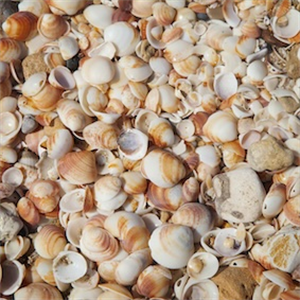
University of East London researchers in the UK bring unexpected solution to one of the biggest environmental problems in the construction industry; sea shells. The new study shows that the pony and dredging shells, which are seen as waste, can be evaluated in low carbon concrete production by converting into fine powders. This conversion offers an alternative solution to both the problem of waste management and the giant carbon load of the construction industry. Low carbon concrete approach is a remarkable step towards reducing the environmental load of concrete, one of the most consumed building materials in the world.
Beton is everywhere in our lives, carbon footprint is also high]
Cement production is divided into about 7 percent of global carbon emissions. The research team developed sea shell concrete by incorporating grounded dredger shells into concrete mixture. In this way, up to 36 percent reduction in emissions was achieved. Moreover, the sea shell did not show a marked deterioration in basic performance properties such as reinforced concrete, strength and machinability. These findings are an important milestone in terms of low carbon concrete targets. “Beton is everywhere in our lives. So the project leader Dr. Dr., who said the carbon footprint is also outstanding. Ali Abass states that the findings are marked in a practical benefit; “The concrete is quite good with the middle level shell substitution. This also shows that it is possible to use sea shell additive concrete in real projects. This vision emphasizes the potential of transition to real projects from the laboratory scale of the material. [
Every year millions of tons of sea shells are going to trash
Microstructure examinations of the research reveal that the shell powder improves the structure of the sea shell concrete, and supports the formation of binder compounds. This situation offers additional advantages for durable and long life for sea shell additives concrete. Thus, a sustainable material application turns into concrete benefit. This finding shows that the material is not only environmental, but also functional in terms of engineering. Million tons of sea shells all over the world are going to trash. Even a part of these wastes, the sea shell is directed to the additive concrete production, supports both cyclic economy and contributes to low carbon concrete targets. The coastal regions where shell waste is concentrated in Turkey can turn into natural test areas of concrete applications. The use of waste sea shells in concrete allows low carbon concrete production by reducing the need of cement and increases sustainability in construction.
Opportunities for vector conversion
In an increasingly increasing period of green conversion printing, the sea shell offers a model that can achieve measured results without requiring additive concrete, cost-effective technologies. Especially common life cycle assessments in Europe and carbon reporting requirements can speed up low carbon concrete usage. In coastal regions where shell seafood is consumed dense, especially in the Mediterranean basin, sea shell concrete is the potential to create a new value chain for local economies.
This method if you give more extensive range of field trials positive results;
- Reduce the carbon release by reducing the use of the cement,
-Can reduce waste management costs,
-It can create new economic value chains in the regions of the floor.
]
This model offers an economically feasible solution alongside environmental gains. The transformation of the material creates a new material cycle that extends to urban structures of the ground.
[
A scalable and scalable innovation
]
The research was published in Construction Materials magazine and is evaluated as an innovation of ‘accessible and scalable’ by experts. Home According to Abass, “As the semi-structured component of the coastal waste is no longer possible; rational, feasible and more necessary.” This perspective reveals that the marine shell can be permanently located in the construction industry of the reinforced concrete application. The use of waste sea shells in concrete allows low carbon concrete production by reducing the need of cement and increases sustainability in construction.
Strategic resource that shapes the making stocks
Sea shell additive concrete approach in low carbon concrete production makes waste shells turn into a valuable source and offers a concrete option that reduces the environmental impact of concrete. If this model is integrated into the supply chain, the waste of the coastal zones have the potential to turn into a strategic source that shapes global structure stocks. [email protected]
Sea shells give a new direction to waste management][
Evaluation of marine shells in concrete production creates a material understanding that is compatible with the carbon reduction targets of the construction sector while a new direction to waste management. When this method is common, the shell waste in the coastal regions can be re-edited by turning into an economic value, and the supply chains are sustainable. Thus, concrete is not only a structure component with lower carbon impact; it can turn into the basic actor of a cyclic material system where local resources are evaluated.
Source: Sustainable Living