


Safeguarding the seeds of the world
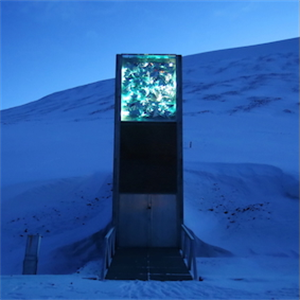
The change of labor has become one of the biggest problems that threaten agricultural production. Extreme weather events, drought, floods and unpredictable weather conditions destroy the crop of farmers and jeopardize food resources. In this regard, seed banks in the world are taking a critical role in maintaining the food safety of the future while maintaining the variety of vegetables. Svalbard Global Seed Case, located beyond the North Pole Office of Norway, is one of the strongest symbols of this struggle.
Why is Svalbard Seed Case important?]
Svalbard Global Seed Case opened in 2008 as the largest and safest seed store on global scale. There are millions of seeds belonging to basic food products such as wheat, beans and rice in the case built into cold tundrain, 1300 km from the Arctic. More than 1 million 331 thousand 458 seed samples are stored in total of 6297 crop types. According to the United Nations Food and Agriculture Organization (FAO), 75 percent of domestic vegetable varieties since 1900s disappeared due to monoculture agriculture. The only type of agricultural method allows only to grow certain types, while the local and old varieties of crops are dragged. Seed cases such as Svalbard are undertaken the task of ‘biological treasure sanctuary’, which accumulates into pieces to lose this wealth. [
] The record-level seed stored in 2024][
Svalbard Case has made one of the most dense seed purchases in 2024. 64.331 new seed samples were delivered from 61 different gene bank to the case. 21 of them belonged to the institutions that have been delivering seeds for the first time. Seed Case Coordinator Åsmund Asdal noted that this number is the highest new entry in the history of Svalbard. The main purpose of gene banks is to protect local and old crop varieties and reproduction in global crises. Svalbard spares seed collections from around the world, since these banks are a global backup.
]Plant genetic diversity is important for continuity
Plant genetic diversity is one of the most important sources for the continuity of food supply chain. The seeds that adapt to growing in different climate conditions can relive in different geographies in crisis moments. This increases agricultural endurance. However, no country is able to literally self-sufficiency with its own seed stocks Tags. Asdal says “Plant genetic diversity is an international business and requires effective collaboration.” Thanks to seed banks, the crop in a region is remanufactured in another region and the sustainability of the global agricultural system is provided. For example, when one of the seed banks was damaged due to conflicts in the Middle East, the harvest of the collection here was received from the Svalbard Case and regenerated.
A combination of international cooperation against the attack of the uterus]
According to Asdal, Svalbard Global Seed Case continues to perform its function regardless of how much the world politics are shaken. Wars, sanctions or political disputes do not affect the mission of seed case. Science people, farmers and researchers benefit from this collaboration that exceeds international limits and rely on these resources. Thanks to this seed case, not only existing crop types, but also plant types that can be used in agriculture in the future. In this period, particularly the effects of climate change have increased, durable seed types are great importance in providing food safety.
[
Conventionally needed more cooperation
Many countries have national or regional gene banks. However, more collaborations and backups are required on a global scale. Although there are more than 1700 gene banks in the world, all like Svalbard are not durable and safe. Nowadays, it is necessary to create new farming policies and to maintain genetic diversity for further sustainable production methods. This does not only secure existing food supply, but also contribute to the development of new crop types.
Food assurance for future generations]
]
Svalbard Global Seed Case is like a insurance policy that protects the future of food supply chain. Seed banks continue to be a vital resource for scientists and farmers around the world. In a world that increases the effects of climate crisis, investing in seed banks and ensuring the sustainability of this system has critical importance for access to healthy food of future generations. [email protected]
Source: Sustainable Living