


No information about 99 percent of insects
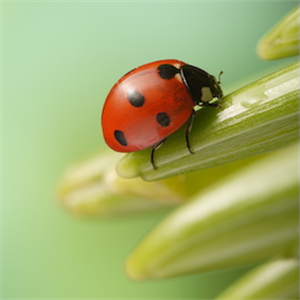
Despite our great impact on the market, people are not dominant type. There are about 1.4 billion insects that correspond to every person around the world and when all insects are met, the human population has more mass than 70 times. Although insects are the most crowded and most common class of open intermediates of animals, our information about is quite limited. Since they have vital importance for food production, the reduction in some important species creates an alarming situation. So what does this happen? According to a research conducted by the British Ecology & Hydrology Centre (UK Centre for Ecology & Hydrology - UKCEH), the London Zoology Association (Zoological Society of London - ZSL), in fact it is early to say it.
They are very few traces out of North America and Europe
]According to the research, there are about one million species of insects known worldwide. Only 12 thousand 100 species were evaluated under the Red List (The IUCN Red List of Threatened Species). 20 percent of the values are considered to be threatened. However, considering less than one percent of the species, the study justifies that "Peki or other 99?". Insect types are very few traces out of North America and Europe. In fact, researchers say that there are almost no data about insects in some regions of Asia and South America, about the species in Africa. [
The percentage of the dragons can run 16 percent of [
The British Butterfly Monitoring Program announced that 2024 is one of the worst years to register for butterflies. A similar situation is observed in Europe and North America. Yusufhals and bees are in the worst case in research on these areas. It is thought that the 16 percent of Yusuf and its family faces the risk of depletion. Research shows that 60 percent of the bee population has been lost since 1990s. An ecological modeling specialist in British Ecology and Hydrology Center and the joint head of study Dr. Rob Cooke has great interest in tracking of charismatic types such as "Armen and butterflies. However, very few people say, despite their benefits for us, so-called unpleasant insects are important." Perfect in pest control, despite the appearance of debilitating, despite the appearance of delicacy. Cleaning leaf lice in fruit trees, making it without harming fruits, bruised cockroaches are extremely important for soil health and decomposition processes. However, it is among the insects that work at least in the world.
What types of insects do not know under threat]
Undoubtedly, many types of insects are reduced. Habitat loss, pesticide use and decreasing food resources make it harder every day to become insecticide in the modern world. However, researchers warn that we need to better understand our effects on insect population without too late. Rob Cooke says, “How common are the declines of the bites and we need to understand what exactly leads to this resurfacing” and adds: “This looks like to solve a missing jigsaw of thousands of parts, but there are dozens of years to fill the gaps and move. "
]
To create a clear picture of the global insect health
The research team proposes a new assessment framework to analyze how insects are affected locally. They aim to create a clearer table of global insect health, although they combine different data sources. Dr. Charlotte Outhwaite from the ZSL Zoology Institute, from the common writers of the study, “When there is about one million species, it takes years to determine what best future is the only one. Instead, we try to determine large-scale steps that will benefit the maximum type of insects. For this, we must mobilize all the information we have,” says. At the next stage, a large number of research methods will be used to model how different types of insects react to various threats. The data obtained will contribute to the development of a more robust understanding of the current health of insect populations worldwide.
Source: Ecosystems