


Microplastics protect viruses
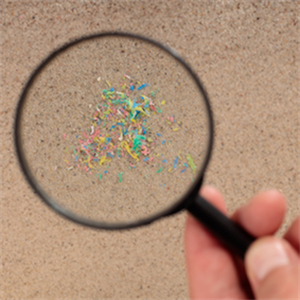
It turned out that dangerous viruses can stay contagious to three days in fresh water by autostop on plastic. The researchers determined that viruses that cause diarrhea and stomach disorders such as routevirus are survived by connecting to microplastics, which are smaller than 5mm. Stirling University researchers noted that these viruses remain contagious and have created a potential health risk. Head researcher at Stirling University Prof. Richard Quilliam said: “We have found that they can stick to microplastics of pillars and that they can survive three days in water.” Quilliam expressed that this study uses standard laboratory methods to determine whether viruses are contagious in microplastics in the water; “We were not sure what can survive in the environment, by making ‘otostop on plastic’. But they survive. He spoke to him as well as maintaining the properties of being contagious.
Brights can be swallowed by swimmers
[[T]]The findings that are part of a project of £ 1.85 million funded by the Natural Environmental Research Council, which examines how plastics carry bacteria and viruses. The article was published in the Journal of Environmental Pollution. Prof. Richard Quilliam said: “To be contagious for three days in the environment, waste water treatment works to go to the public beach for a long time. Waste water treatment plants can not capture microplastics. Even if a waste water treatment facility is doing everything from hand to clean sewage waste, there are still microplastics in the discharged water. These are then transported to other areas via rivers. These plastic particles are so small that for example, can be swallowed by swimmers. There is no need for a lot of virus threads to get you sick. ”
Brights can be swallowed by swimmers
[[T]]The findings that are part of a project of £ 1.85 million funded by the Natural Environmental Research Council, which examines how plastics carry bacteria and viruses. The article was published in the Journal of Environmental Pollution. Prof. Richard Quilliam said: “To be contagious for three days in the environment, waste water treatment works to go to the public beach for a long time. Waste water treatment plants can not capture microplastics. Even if a waste water treatment facility is doing everything from hand to clean sewage waste, there are still microplastics in the discharged water. These are then transported to other areas via rivers. These plastic particles are so small that for example, can be swallowed by swimmers. There is no need for a lot of virus threads to get you sick. ”
Source: News