

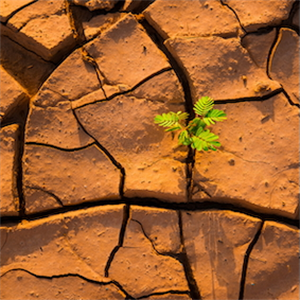
Kuraklik sinsi disaster
BM (Unified Nations) Water Agency (UN Water), approximately 3.6 billion people across the globe face at the day of waterless access and this number is expected to 56° billion to 2050. In the news of the Anadolu Agency (AA) 'Damla drop deficiencies' file, the effect of the state and climate change in the water sources in the world has been studied. The use of fresh water resources throughout the world is demanded about 1 year with changes in population growth and consumption habits, this situation creates large pressure on resources. According to the data of the US-based World Resources Institute, 25 countries around the world fight with excessive water stress throughout the entire year. In the wind of the most experienced regions of water stress comes from Central East and South Asia with North Africa. 83 percent of the population in the Middle East and North Africa is exposed to 74 percent of the population in South Asia.
If the water is insufficient, the cities can be drained
]]
While the countries are exposed to water stress are facing many problems, economic problems are particularly interested, they also come advice such as the evacuation of cities to fight this impossible. Finally, the President of Iran Mesud Pezeşkiyan said that at the wind of November the capital was Tahran in short time, since December, they will have to go to water spoils in the city, if this is insufficient, they will have to evade Tehran. The problem caused by reduction in water resources are not limited in the country, among countries may cause disputes. The work of the U.S.-based thought organization Pacific Institute shows that more than 400 disputes have been lost due to water throughout the world from 2020 to 2023, among countries or some of these disputes experienced in the country are officially into conflicts. [[
]"The water on the surface of the world can be used at 0.3 percent"]
]]]]
The United Nations Food and Agriculture Organization (FAO) Turkey’s Representative Ayşegül Sellight said that increased temperatures accelerated levels of due to climate change, and more moisture retention of the atmosphere leads to refugees, flood and droughts, making the water cycle irreversible. Sellight, which means to the current state of global water resources, "Their water resources are controlled by dispersed. While the 71 percent of the world surface is covered with water, only 2.5 percent of sweet water, the available part is less than 0.3 percent. According to the World Meteorology Organization (WMO) report, the water cycle has now become more irregular and excessive, the release between drought and flood events is observed.
The positive reduction in surface fresh water sources
In the center of the fresh water springs in the world, Ayşegül Selkin, pointing that the surface is sweetwater sources, lacquer and frosts, refusal that the softener in underground water sources occurs in invisible, uncontrolled and extreme use. Sellight, which expresses the fact that the frosts and lacques are accelerated with the direct impact of climate change, continuing to count 70 percent of the world water reserve of the ice: "Buzullar alarms. 450 gigaton calul mass melt. In 2024, the melt in the frosts caused the rise of 1.2 millimeters in the sea level. This means the reduction of long-term freshwater reserves. In some regions, the water flow from ice is now blocked. The large part of global river flows is also under normal levels, and this is a serious separation for agriculture, drinking water and ecosystems. Only 3 in normal conditions. In 2024, 66 percent of the global rivers were drown or extens. This shows that the sixth year round in a row lasts.
]
"The gratitude is now known as 'nife'"
Due to the extreme withdrawal of 68 percent of fresh water losses, and the most remarkable decline in the amount of fresh water per person is particularly open to climate change, the population density is high and water management is experienced in poor regions, Ayşegül Sellight, “These regions are examples of Middle East and North Africa (MENA), India and Pakistan, West Africa and Sahara Six African, West Europe and Southeast Asia. frequency in the world. Most affected countries from this situation; Somalia, Zimbabwean, Yerevan, Mozamambique, Ethiopia and South Africa are under high risk while the drought effects are deepened, Ethiopia lives one of the world’s most pleasant drought arbitration. In Europe, Italy, Spain, Greece, Turkey. Iraq, Iran, Syria and Jordan, while spinning the risk of water shortage and migration in the Middle East, it is expected to transfer for the drought of 216 million people up to 2050. Underground waters in South Asia, such as India, Pakistan, Afghanistan and Tajikistan quickly drop, muson irregularities increase the risk of drought. Cookie is now known as 'nife'. The effect is long-term and multi-layer.
]
[
"You may witness two different excirem events in year"]]
]]]
European Environment Agency (EE) Water Resources, Water Continuity and Kuraklik Specialist Dr. The final Zal reserves that the major regional monuments in climate conditions, population growth and intensive land utilization of the European water sources entering more pressur Home. Zal draws attention that around 30 percent of European lands and 34 percent of the population live water stress, and this rate tends to increase due to climate change, "In recent years, maybe one of the most accessible effects of climate change, and in the same stream of the presence of both drought and flood. In the same year, two different extreme events can be witnessed. Zal, which has three basic issues with water in Europe, as water pollution, floods and water scarcity, reported that these problems affect water presence, water-related ecosystems, energy production with food and human health direct.
"More like droughts are expected"]]]
The final Zal, which expresses that countries are located in the south of Europe are sensitive in terms of water shortage: "In particular, Turkey, Spain, Portugal, Italy, Greece, countries such as countries can become more sensitive depending on the fact that water scarcity or water resources are excessively variable. It can be included in the countries of Eastern Europe such as Romania, Bulgaria recently. In these, there is an overuse of agricultural water, and these countries can also encounter very serious problems in terms of the risk of stone as it is the sub-basin countries. Zal, says: “In the years in our country, significant declines in the amount of refugees in the south of Europe and more like droughts are expected. It is also thought that will be a situation that will trigger water consumption in the industry with agriculture, drinking and using water. dirty with changes in land use will also lead to more shares of this effect. "
Source: Sustainable Living