


Is it a new period in animal rights?
The animals in the country are considered in the property of people who are legal. But in recent years some courtesy and lawmakers began to reconcile this approach.
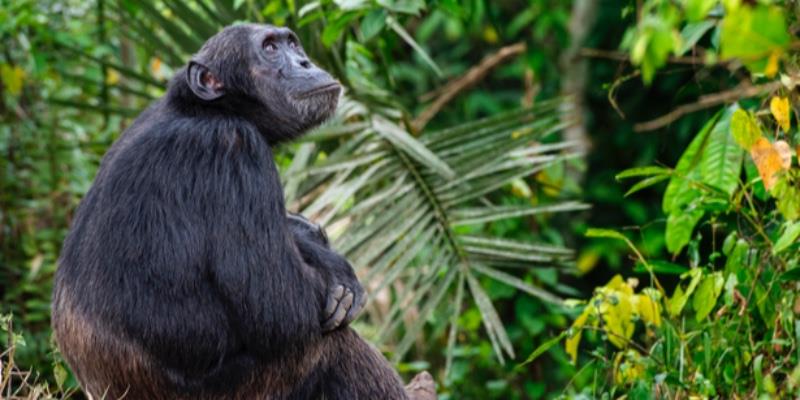
In Argentina, a schempanzeye was given the status of “family person”, India courts said that animals have constitutional rights, a new law was designed for balinas in New Zealand.
These developments carry out the question that a new period in animal rights has not started.
[[T]]]
[Cecilia case: First open decision
On November 3, 2016, Argentina signed a court history decision in Mendoza. Hâkim María Alejandra Mauricio announced the "unmanned legal person" of Shaempanze Cecilia held in Mendoza Zoo and ordered the release.
]
Cecilia kept alone in a small concrete cage for 30 years. The sun light wasted, there was no trees, the temperature was zero in winter, the summer went to 40 degrees. Hâkim decided that Cecilia is "right to live in the field of natural life" and ordered a transfer to a shiempanze bar in Brazil.
In court decision, the following statement was: "The large monkeys, including poempanzes are sensitive assets, and therefore non-humans are the essence of the rights. Not only objects. "
]
This decision was the first time a court clearly recognized a animal as a legal person.
Other decisions inArjantin]
Cecilia case was not the first in Argentina. In 2014, the proportion was released from Sandra, the Buenos Aires Zoo and the rights of the personality were recognized. In 2023, puma Lola Lemon was announced "the essence of the things" and transplanted to the Buenos Aires Ecopark.
Argentina law has a different structure from Anglo-Blowjobn law system. This structure makes it easier for animals to remove from the category of "five".
]India: Broad recognition for all animals]
In 2014, India High Court decided that all non-human animals have both legal and constitutional rights in India. [
In 2015, the High Court of Delhi agreed that birds are "the main right of flying." Uttarakhand High Court in 2018 recognized members of the entire animal orgy as "person".
These decisions differ from the narrow comprehensive approaches in Western countries. Not only certain species, but a large recognition of all animal adenmine is done.
Colombia: Bear Chucho
In 2017, the Colombian High Court announced the bear Chucho with glasses. The court confirmed that the animals have various protection rights, including the right of freedom, they are "forementioned".
The truth questioned that companies are not recognized for sensitive living when they are recognized for legal persons.
[email protected]
Panama: Sea Turtles
In 2023, Panama released a law that knows special rights to sea turtles. These rights include living, migration and development rights in a healthy environment.
The law focuses on a certain type and arranged in the framework of ecological benefit. But still a step towards the protection of animals for their own values.
Peru: Needle-free bees
In 2025, Peru’s Satipo municipality, recognized needleless bees (meliponines) as "hak owners". The rights of creation of healthy populations and renewing living spaces were accepted.
This decision was taken locally and focused on a specific type. But again, a concrete step towards the recognition of the rights.
New Zealand: Design for Whales[
In February 2026, Tohorā Oranga Law (Balina Health Act) was presented in the Parliament of New Zealand. Design predicts the recognition of legal personality and natural rights to balinas. [
The right of free movement and migration among the recommended rights is the right to live in a healthy environment, the restoration of living areas and the protection of natural behavior.
The design has not yet been illegal, but if it becomes law, it will be the first binding tool to the balinas in the Pacific. [
[Europe: New Debate
The European Animal Rights Declaration (EDAR) was announced on 17 February 2025. French researchers aim to create legal personality for animals and to recognize basic rights. [
443 signed, about 100 of them came from civil society organizations. Declaration is not legally binding, but it is aimed to have a guide for legal reforms in European countries.
32 countries recognized sensitivity
As of November 2019, 32 countries have officially recognized animal sensitivity. These countries include Austria, Australia, Belgium, Chile, Denmark, France, Germany, Italy, Netherlands, New Zealand, Spain, Sweden, Switzerland and UK.
Recognition of sensitivity means that animals are assets that are suffering, emotional lives. However, this is different from legal personality recognition. Even if it is known for sensitivity, animals in many countries still remain in the category of "five".
[
United States: Ret decisions
In the US, Nonhuman Rights Project opened a large number of habeas corpus cases on behalf of schempanzeler and elephants. Habeas corpus is a legal tool that questions the legality of deprivation of freedom.
In 2014, the case opened for schempanze Tommy was rejected by the New York High Court. The court stated that the legal rights require corresponding responsibilities, the animals shall not fulfill these responsibilities.
In 2022, the case opened for fil Happy in Bronx Zoo was rejected by the highest court of New York. The court accepted ethical concerns but did not recognize personality.
U.S. courtesy of the traditional legal categories.
Why is this discussion important?]
The recognition of legal personality to animals is not only a symbolic change. There are practical results. [
When a animal is accepted as "heavy", it is seen as the most "sult" to harm him. The owner may open the case, but the animal can not go to the court on his behalf.
The animal may be represented as their own rights in the legal entity. It is necessary to take into account the interests of the animal in the decision processes.
For example, in the case of Cecilia, the court kept in the forefront of the welfare of Cecilia, not the easyness of the zoo.
Snipers and criticisms
Most of the existing decisions focus on certain types: large monkeys, elephants, whales. These types are chosen as they are close to human genetic or intelligence.
This approach ensures that animals are protected from "likes" But critics are an atroposentric approach, say that animals are protected not for their values, but how much they look like to human.
Also most decisions are taken by local courts and are not binding in the national diameter. If the decisions in Argentina are pacified, it is not automatically applied to all animals throughout the country.
billions of animals in industrial livestock are still exempted under standard agricultural applications. While a court recognizes for schempanzeye, millions of chickens in the same country, pigs and cows are still in the status of "so".
What does this table mean?]
The legal personality movement for animals is slow but steadily moving. Since 2014, concrete steps were taken in Argentina, India, Colombia, Panama and Peru. New legal frameworks are discussed in Europe and New Zealand.
These changes show that law systems begin to question traditional human-life discrimination. If the company can recognize the legal personality to ships and even rivers, the question of the recognition of sensitive animals is now reflected in courts. [
However, a common legal change has not yet happened. In most countries, animals are still in the category of "five". Change is step by step by step by single court decisions, local regulations and civil society printing.
Source:]
IUCN 2026, Conservation International 2026, Nonhuman Rights Project 2024, World Animal Justice 2025, Earth.org 2026
Source: Ecosystems