


Is food waste, plastic waste? Hard balance in fruit-sebze packaging
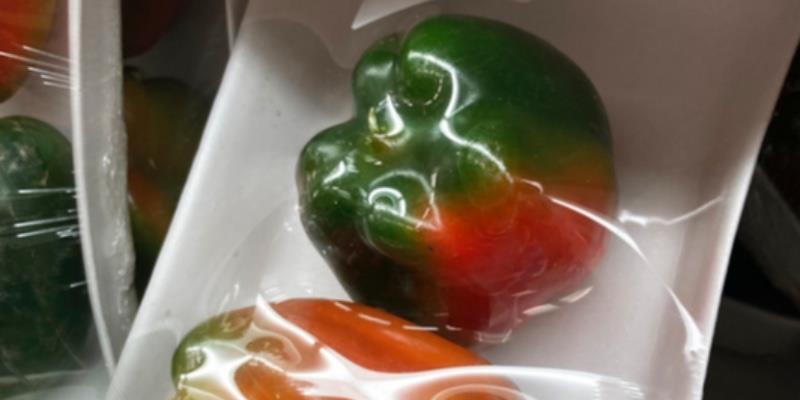
The fight against plastic pollution has become one of the most visible headers of sustainability agenda. New regulations are prepared to reduce unnecessary packaging in market shelves in many countries. Plastics used especially in fruits and vegetables are often criticizing.
But here is a remarkable paradox appear: While plastic packaging creates an environmental problem, it can also provide a different environmental benefit, reducing food loss.
A life cycle analysis (LCA) study published in May 2026 compared the environmental effects of different packaging systems used in fruits and vegetables. The research reveals that packaging should be evaluated not only through the amount of waste, but with the effect on food loss.
[[T]]]
[Why is plastic packaging used?]
Fruit and vegetables are one of the most sensitive product groups of the supply chain. There is a risk of crushing, degradation and decay in the process of passing through the harvesting market rack.
]
The basic function of packaging is not only carrying the product. At the same time extend shelf life, reduce physical damage and prevent product loss.
The removal of packaging in some products according to the research can increase food loss. In this case, it is necessary to produce new ones instead of lost products. More production means more water usage, energy consumption and agricultural input.
Therefore, in some cases, the environmental impact of the packaging has to be evaluated with the loss of food that it prevents.
The environmental cost that does not appear in food loss
A kilogram of freckle does not only mean the loss of a kilogram of food.
The water, energy, fertilizer, land and transportation resources used for the product are also wasted.
Therefore, many life cycle analysis in recent years shows that the environmental impact of the product itself can be higher than the packaging.
Especially in easy-damaged products, even small amount of food loss can exceed environmental impacts caused by packaging.
This does not defend the use of plastic. But the discussion shows that only the packaging waste can remain missing.
]
Plastic waste problem continues
]
On the other hand, the waste problem generated by plastic packaging can not be smaller.
A research published in 2026 in the US revealed that the large part of the fruit and vegetables sold in markets are presented with plastic packaging.
Studies in the UK show that only billions of plastic parts are used in the fruit and vegetable sector.
An important part of the problem is that the recycling of fine and flexible plastics is difficult. These materials are often unable to be included in recycling systems and become waste.
Although plastic packaging has the potential to reduce food loss, it is seen that it continues to create serious problems in terms of waste management.
How to install this balance in Europe?][
The European Union prepares new regulations to reduce packaging waste in recent years. [
Packaging and Packaging Waste Regulation (PPWR) aims to reduce unnecessary packaging usage in certain product groups.
However, experts emphasize that packaging policies should not only look at the amount of waste, but also the effects on food loss. Because each product is not the same. When packaging in delicate products such as berries, mushroom or ready salad can provide an important protection, this effect in some fruits and vegetables can be more limited.
Therefore, the opinion required to be evaluated on the basis of the product stands out.
[Do my solution choose between plastic or waste?]
]
Research shows that the discussion is not only “plastic, non-plastic?”
In recent years three approaches stand out:
- reusable handling and distribution systems,[
- Biodegradable or alternative packaging materials,
- Shorter and efficient supply chains.
Especially reusable plastic crates (RPC) are shown among the options that can reduce the need of disposable packaging while maintaining product protection. However, logistics infrastructure and investment is required for the prevalence of these systems. [
More big question[
Plastic packages used in fruits and vegetables are one of the most complex examples of sustainability discussion. The problem of plastic waste in one side is the environmental cost of food loss in the other pedestrian.
Therefore, the solution is seen not only to eliminate the packaging, but to develop systems that reduce product loss and waste together. Sustainability sometimes does not prefer between two options, meaning redefined the question.
[
Source: Sustainable Living