


I'm happy to eat in Korea Peninsula Tags
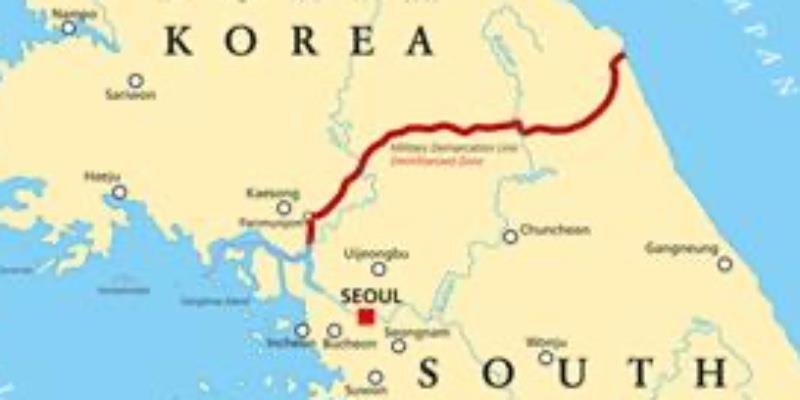
Their and political limits often leave permanent destruction on nature. In Korea Peninsula, there is a remarkable example that shows the opposite. The liberated area of the soldier, which is located between North and South Korea, stands out as one of the most rich biological variety areas of East Asia today thanks to the absence of people who last for about years.
] 6 thousand 200 wild species in the region]
In 1953, the liberated area of the soldier created after the Korean War is covered by a two-meter buffer area. This line extends over 241 kilometers in total is one of the most stringent protected limits in the world. The fact that human access is almost completely prohibited, turned the region into a safe area for natural life in time. Today this area; it attracts attention with the mosaic structure consisting of wetlands, forests and mountainous ecosystems. The South Korea National Institute of Ecology live about 6 thousand 200 wild species in the region according to the data. Around 38 percent of the species that are threatened across the country finds the possibility of narrow or shelter. [
]safe space for species under the threat[
Asian black bear, leopar cat, Korean gorali and rare species such as Siberian musk are used as a permanent living space. The seven of the 15 types of turna in the world are observed in this region. This area is considered one of the most critical stops in East Asia, for birds under the danger of global scale such as white transverse and red crowned turna. The rapid reduction of wetlands in China and Japan is highlighted as one of the rare examples that protects the ecological continuity of this closed area in the Korean border line while narrowing the habitats of immigrant birds.
70 thousand hectares domain protection status][
Although there is no direct access to the region, scientific studies are carried out in the southern buffer area called the civil control zone. South Korean non-governmental organizations and research institutes created an important data accumulation with field observations in the last 30 years. Thanks to these studies, 70 thousand delegations have been officially protected. According to experts, the biological wealth formed here is not only the legal environmental protection measures, but also the result of long-term human absence. The researchers especially emphasize that rice fields used by traditional methods live a large number of sensitive types in small water channels. Compared to dense farming areas, these fields accommodate more wild plants and have the function of transition corridor for many creatures from small mammals to birds.
Birth observation tours tell the ecological value]
In recent years, limited-scale ecotourism activities are also on the agenda. Bird observation tours and peace walking routes developed by the government aim to tell the ecological value of the region to the public. However, experts emphasize that such activities should be carried out with strict rules. Gaining speed of infrastructure and development projects along with the largest risk, political relations according to the researchers. While the possibility of peace is promising, uncontrolled development pressure can threaten this unique ecosystem.
[
A strong symbol for the baby
This narrow line between North Korea and South Korea offers a vivid example that shows the durability of paradoxal nature. A military voltage-recognized area has a significant lesson in tens of years to transform a wildlife into the bunker, the ecosystem’s self-renewal capacity. Earth. As Org is highlighted in the news, the free zone of Korean soldiers is not only in terms of biological diversity, but also a strong hope symbol in terms of showing how nature can return when it is provided correctly.
[ Source: Earth.Org, A Symbol of Hope: How the Korean Demilitarized Zone Turned Into a Wildlife Sanctuary, Janet Doorduin, 2026.
Source: Ecosystems