


How does plastic pollution affect animals?
The global production of the automotive is increasing, but the recycling rates are still not at the desired level. Global plastic pollution took place as 348 million tons in 2017 while two million tons in 1950. This figure is expected to be two times in 2040. This increase threatens the future of all ecosystems on the planet.
Here are some effects on animals of plastic pollution...[
[[T]]]
[Animals swallow plastic]
A research conducted reveals that 1557 animal eats plastic, including many species in nesli depletion. When plastic is thought to be more common in sea animals, the study proved that the types of terrestrial and sweet water are also affected. In 2019, a turtle from the egg was dead with 104 pieces of plastic in the stomach. Plastic pollution and wastes can cause intestinal blockage and deadly damage when swallowed by land animals.
]
Microplastics damage organs
According to the United Nations; more than 51 trillion microplastic particles are circulating in world seas. Microplastics are thought that smaller plastic particles than five millimeters can pass through the digestive systems of animals. However, researches confirm that microplastics can cause disruption in liver and cell damage as well as reproductive systems. For some species like oysters, this means the risk of producing less eggs and destroying. [
Plastics trap for animals
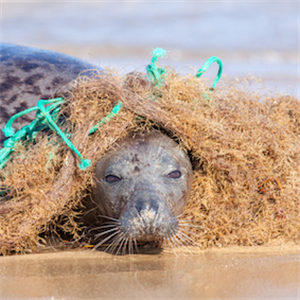
Some of the animals can be installed and filled with plastic traps. This makes them vulnerable and turns out. The animals that accidentally put their heads into plastic food containers, overheating, drowning, dehydration (the loss of excess liquid), hunger and finally face death. Plastics attached to the feet and wings of birds eliminate their ability of flying, protection and hunting.
Earth and water resources under risk
Microplastics are leaked into ground and nearby water sources from plastic waste in garbage and other environments. A study that researches how the presence of microplastics can affect the soil fauna in 2020 proved that terrestrial microplastic pollution leads to reduced species living under the surface, such as larvae and mites. Reduction of these types leads to losing yields of soil and lands. Moreover, plastic food packagings, chlorine plastics such as medical devices and products with pipes, are the potential to shake harmful chemicals in the surrounding ground by leaking into underground waters that many types of lumbar.
Source: Earth.org
Source: Ecosystems