

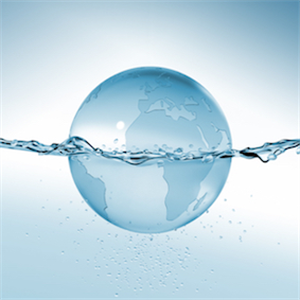
Global warming changed water cycle
According to the report, published in the National University of Global (ANU) of the Global Water Monitoring Consortium, and the first one, in the row, the third La Niña in the United States reported the current drafts, causing floods in some regions of Asia and Oceania. A few public, private research and development organizations with the aim of providing fast and global information about climate and water resources, accompanied by the ‘2022 Abstract Report, published in Global Water, which is a joint venture of the organization, revealive for 2023 while offering assessments for extreme weather events in 2022. The report reveal that global warming changes the water cycle across the planet. At the same time, events such as a sudden drought have been found in warnings in the coming years.
Data collection has been downloaded several days[
Professor Albert Van Dijk, the head of the research, expresses that the report offers a unique image of global water filtration. Professor Van Dijk from ANU Fenner Environment and Community School, says “Normally, collecting, shielding, analytics and interpretation of such data takes months” and reserves: “Our partner was able to download this time several days by using the best possible satellite tools in the world orbit and associated with all data analysis.” Group combines water treatment by thousands of ground stations and satellites to produce up-to-date information about classification, air temperature and humidity, base water, river flows and natural, artificial lacquer. [[
Enable conditions in Argentina, Peru, Tunisia and Somali
]]Globally dominated relatively warm ocean waters in East and North Indian Ocean with West Pacific in 2022. As a result, a pleasant hot wave developed in South Asia and then seen a very rainy muson era, which causes large floods in Pakistan. The extreme hot waves in Europe and China led to low river flows, agricultural damage and forest fires, causing ‘Ani droughts’. Most drown conditions were recorded in Argentina, Peru, Tunisia and Somalia. According to the report; detached the dry and hot conditions in some countries, the annual average water content was not unusually low in no country. Accordingly, the usual wet soil conditions in 33 countries where Turkey is located in: eight countries in Africa, eight countries in south and southeast Asia (including India, Bangladesh, Thailand, Vietnam and Indonesia), six Caribbean countries, Turkey and other places are located in six small countries and regions.
Need more water to stay healthy]
The report shows that the air temperature in 2022 in the long-term warm trend, the air tightness. Professor Van Dijk says, “This means that nature needs more water to stay healthy, appetite and people, which also increases the problem even more,” and continued as follows: “It is a safe hunger that we will see these hot waves and the ani cushions more. We also see evidence of global warming on the impact on the water cycle in frosts and cold regions, and in fact, the floods in Pakistan were share. This will until the frosts are destroyed.
]
]2023 is a year to pass with droughts]
]]
One of the most remarkable events in 2022 was that the third La Niña was experienced in the back. This led floods in Australia but also deepened the conditions of drought in the west of the United States and in some regions of South America. Professor Van Dijk says “Juri, what’s the first signs.” Van Dijk pays attention that La Niña or El Niño will cause and long-term droughts in case of longer stay, and then with more liked floods. In case of 2023, the report has been offered for a year, which is more busy in some regions of North and South America, Central Asia, China and African Boy. In addition, La Niña conditions lose its effect, so in some of these regions, water availability is hoped to return to more normal levels soon.
Source: Climate Change