

France forced food waste to compost
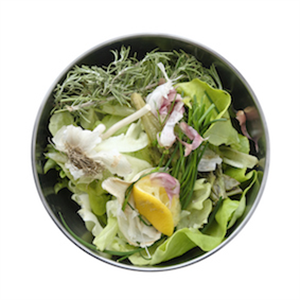
Since January 1 in France, citizens were forced to compost food and plant waste. Municipalities help France to separate biological waste, such as vegetable shells and past food to citizens with the support of 2 billion euros Green Fund. It is necessary to accumulate in plastic garbage or collection points distributed by the municipality of organic waste. Compost chemical fertilizer collected by local administrations will be used to replace or convert into biogas. The facilities will not apply fines until they are widespread and will not bring more strict rules in the future. Before the decision, it was necessary to separate the garbage of more than five tons of organic waste productions per year.
One of the three biological waste
[[T]]It produces greenhouse gases such as food and garden wastes, regular storage areas or metan in burning furnaces when domestic wastes are almost three of them. According to the European Commission, food wastes are responsible for about 16 percent of the total emissions produced by the European Union (EU) food industry. The United Nations says that food waste and loss create about 8 percent of global emissions. Organic wastes can also be polluted packaging, which will be sent to recycling such as paper, plastic and glass. According to the non-governmental organization called Zero Waste Europe, only 34 percent of the total biological waste of the EU was collected in 2018, and 40 million tons of potential fertilizers were laid out without being used. Every year in France estimated 82 kilos per person are thrown into compost trash. [
[
Is it mandatory to exclude biological waste in other European countries?
] The separation of biological wastes from this year in Europe is based on EU directive, but the mandatory target is not put. Recycling of organic waste in many European countries in the jurisdiction of municipalities. The city of Milan in Italy has been carrying out food waste collection in residential buildings since 2014. At the beginning of the program, bags were given for special trash boxes and compost. Similar programs such as ban or taxation of biological waste were promoted in four of Europe. Separate trash boxes in Austria, the Netherlands and Belgium and the compost collected at home is common. The UK announced it plans to start food waste collection in 2023. Although the participation is volunteer, it is common in Wales and workplaces.
How to split chemological waste?[
Indically, it is recommended to keep all waste at a minimum, including organic substances. This can be provided with a careful meal planning. It can help to consume, freeze or maintain food before the expiration dates and reduce the waste of using all of a material. Some food wastes can be converted even to animal feed. Food waste that cannot be stored or re-evaluated should be composted or separated to gather. This includes food, flour products, dairy products, egg shells, fruit and vegetable shells, mildewed foods, pet food, raw or baked meat and fish, bones, tea and coffee wire. Liquids, non-food products and packaging should not be thrown into biological waste boxes.
One of the three biological waste
[[T]]It produces greenhouse gases such as food and garden wastes, regular storage areas or metan in burning furnaces when domestic wastes are almost three of them. According to the European Commission, food wastes are responsible for about 16 percent of the total emissions produced by the European Union (EU) food industry. The United Nations says that food waste and loss create about 8 percent of global emissions. Organic wastes can also be polluted packaging, which will be sent to recycling such as paper, plastic and glass. According to the non-governmental organization called Zero Waste Europe, only 34 percent of the total biological waste of the EU was collected in 2018, and 40 million tons of potential fertilizers were laid out without being used. Every year in France estimated 82 kilos per person are thrown into compost trash. [
[
Is it mandatory to exclude biological waste in other European countries?
] The separation of biological wastes from this year in Europe is based on EU directive, but the mandatory target is not put. Recycling of organic waste in many European countries in the jurisdiction of municipalities. The city of Milan in Italy has been carrying out food waste collection in residential buildings since 2014. At the beginning of the program, bags were given for special trash boxes and compost. Similar programs such as ban or taxation of biological waste were promoted in four of Europe. Separate trash boxes in Austria, the Netherlands and Belgium and the compost collected at home is common. The UK announced it plans to start food waste collection in 2023. Although the participation is volunteer, it is common in Wales and workplaces.
How to split chemological waste?[
Indically, it is recommended to keep all waste at a minimum, including organic substances. This can be provided with a careful meal planning. It can help to consume, freeze or maintain food before the expiration dates and reduce the waste of using all of a material. Some food wastes can be converted even to animal feed. Food waste that cannot be stored or re-evaluated should be composted or separated to gather. This includes food, flour products, dairy products, egg shells, fruit and vegetable shells, mildewed foods, pet food, raw or baked meat and fish, bones, tea and coffee wire. Liquids, non-food products and packaging should not be thrown into biological waste boxes.
Source: News