


Climate crisis threatens the passage of sheep
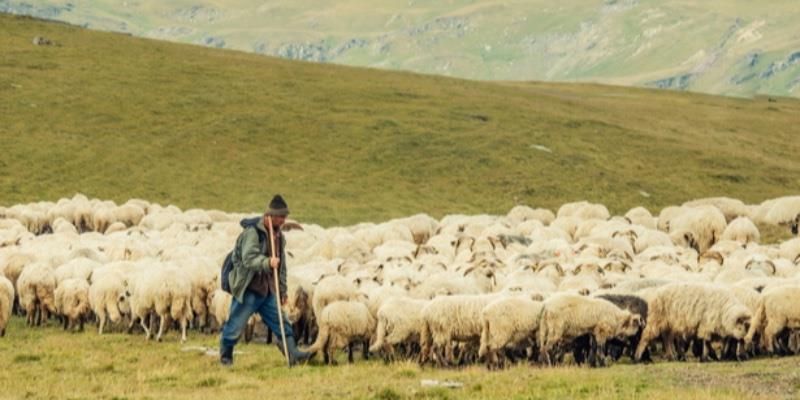
The attack removed note only cities and industries, but also rural forms of life. The future of the pastures is becoming more uncertain, especially for the communities moving with pot. Research shows that climate change can risk the supply of millions of people by musicianing grass areas across the world.
The United Nations Food and Agriculture Organization (FAO) announced 2026 years of “Mera and Shepherds Year” in order to pay attention to the role of the sustainable food production and ecosystems of pastures. This decision emphasizes that pastures are not only for pot, but also have a critical importance for ecosystem balance.
[[[T]]Meras covered half of the planet]
]]]
Big ecosystems from meadows and prosecutors to deserts and mountainous regions. These areas create about half of the world's land surface.
]]
Meralar is not only the areas where animals are grassed. It also provides important ecosystem services such as carbon storage, water cycle editing and biodiversity protection. The pastures for many societies are also part of cultural heritage and traditional forms of life.
]
However, drought, flood, transplant and increased animalkind are difficult compelling the sustainable use of these areas.
Under the risk of half of the areas of polishing
Potsdam Effects Climate A study conducted by the Research Institute reveals that climate change can reduce mera areas on the global scale.
According to the research, 36 to 50 percent of the suitable areas for grazing up to 2100 can become untouched. This can directly affect appetite activities.
According to the same study, it is estimated that in the number of magnitude and small animals can be reduced from 1,4 to 1.6 billion. This change can lead to the fact that millions of people who live in rural areas and allow them to become economically accessible.
Acts vary depending on regions
The effect of climate control on pastures will not be the same in all regions. In some regions, losses are expected to be experienced in many regions. [
It is estimated that mera loss in Europe can be between 87 to 95 percent. This rate of Oceania may vary from 37 to 66 percent of Africa from 16 to 65 percent and 34 to 50 percent of South America.
In Africa, Sahel and Congo Basin are bound that important grassing areas can not be used due to excessive temperatur Home. While weeding areas in South America are waiting to be slipped south, Asia, weed activities are forecasted to be west and higher levels than east.
Bunny communities under more risk
]
Research shows that the effects of climate examples are not distributed. The large part of negative effects is busy on communities living in low and medium-income countries.
85 percent of the effects according to the data will be seen on people living in medium and low revenue countries. At the same time, communities living in countries with high gender equality are more accessible.
Approximately 130 million people live in countries with serious hunger risk such as Afghanistan, Ethiopia, Somalia, Yemen, Çad and South Sudan. [email protected]
[email protected]
Uyum policies are critical importance]
According to experts, we need strong policy tools to reduce the effects of climate difficulties on the pastures. Climate-compatible systems, international collaboration and social support can play an important role in this process.
The distinction that poverty and social impact in the areas where appropriate climate conditions for grazing may be possible with long-term policies.
The protection of needles is not only for the future of pot, but also seen as a critical issue in terms of food safety and ecosystem balance.
Source: Bianet
Source: Climate Change