


Report
Addressing Climate Risks İs Essential for a More Stable World
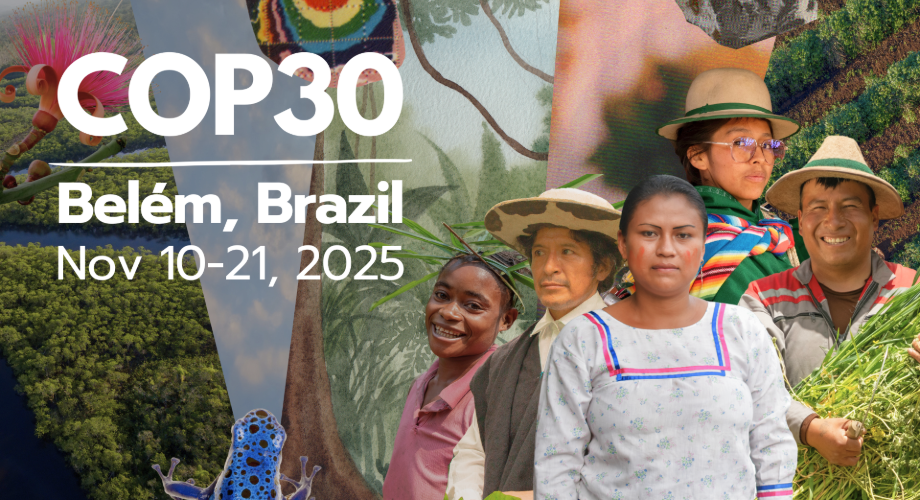
The 2025 Global Multidimensional Poverty Index (MPI) report, titled "Overlapping Deprivations: Poverty and Climate Hazards"—prepared by the United Nations Development Programme (UNDP) and the Oxford Poverty and Human Development Initiative (OPHI) at the University of Oxford—has been released. Published ahead of the COP30 (United Nations Climate Change Conference) summit in Brazil, the report provides new evidence on how the climate crisis is reshaping global poverty. By, for the first time, overlaying data on climate hazards with data on multidimensional poverty, the report reveals that poverty is no longer merely a socio-economic issue; it has become a phenomenon deeply intertwined with the pressures and instabilities affecting the planet. Exposure to climate risks compounds existing disadvantages, making daily life even more difficult for people living in poverty.
The process of developing is recreated
According to the report, 651 million of people who live deep multi-dimensional reduction in areas of health, education and living standards face at the same time with three or four climate risks. Haoliang Xu, Deputy President of UNDP, said, “We want our new research to reduce global poverty and build a more stable world for everyone, expressly show that we should fight climate risks that arises about 900 million poor people,” said: “When the leaders come together in the COP30 Climate Conference to be held in Brazil for the next month, national climate commitments should create re the development process, which stops the risk of leaving the world’s worst people behind. “
Where places are forced by the attack
The report reveal that poor people face connected with multiple environmental threats, not only in the world. 887 million people suffering from climate danger faced 651 million with two or more climate risk. 309 million poor individuals live in areas where three or four risks are cut. These people carry a ‘international or quad load’ due to limited resources and poor social protection systems. The risks that affect individuals in the most common form of excess warms (608 million people) and air pollution (577 million people). 465 million people live in areas of flood risk, 207 million people affected by fraud. The author of the report and the Director of Oxford Minority and Human Development Initiative, “This report shows where the reduction is interrupted by climate elimination. Understanding the areas where the planet is under the pressure and the areas that people face with additional loads created by the climate, he spoke to the center of people, with critical importance to building each other-strength development strategies.
Geography and economic points
According to the data revealed by the research; the intensity of being open to climate hazards is not equal to between regions and groups of revenue: South Asia and Sahra Six Africa stand out as global hubs of these conflicts. The largest part of the poor population living in areas under climate risk is located in two regions: 380 in South Asia, 344 million people in Sahara Six Africa.
The situation in South Asia is almost universal: 99.1 percent of the poor population living in the region is exposed to one or more climate shock (380 million people), 91.6 percent faced two or more risks (351 million people). Despite the progresses recorded in poverty, it is necessary to accelerate the climate action of the region. Sub-medial countries have a poor population that is most exposed to climate hazards in terms of total number and proportion. In these countries, 548 million poor people are predicted to have at one climate hazard – which represents 61.8 percent of poor people exposed to any climate hazard in the world, more than 470 million are facing at the same time with two or more risks.
Could not be calculated for Türkiye
“ Pedro Conceição, Director of the UNDP Human Development Report Office, said, “Note only this, but also extends to the future.” Temperature projection data shows that countries where multi-dimensional reduction is the highest, will experience the best increase in temperatures up to the end of the century. These examples are followed by unequal burden of climate-borne hazards. The fight against these uncut risks are forced to take action from awareness; accompanied by climate-resistant reduction strategies, changing the local balance and scale financial coordination with international diplomacy. Due to the lack of multi-dimensional Absency Index data, 2025 Global Multi-Dimensulluity Index report has been included in Türkiye.
Source: Sustainable Development