

Digital copy of nature: The new way to protect biodiversity
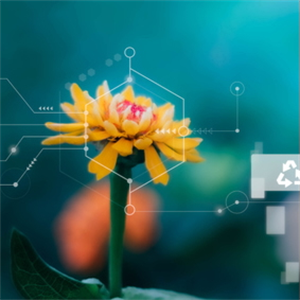
Forests are quietly changing. The migration routes of birds are slipping, coral reefs are white, some plants leave living spaces as climate changes. All these changes are now almost impossible to follow one in the field.
Therefore, scientists work on a new method: create the digital twin of nature.
From satellite images to sensors meet millions of data in one digital model from drones to observations shared with their mobile phones. Thus, researchers are trying to guess not only what’s happening today, tomorrow. Perhaps the new era in protection of nature starts here.
[
What is digital twin exactly?
[“Digital twin” means a continuously updated numerical model of a system in the real world. This technology has been used in many fields from aircraft engines to factories for many years. Now the same approach is applied to forests, wetlands and sea ecosystems. The goal is not only to create a map. When the temperature rises in a forest, what types of trees will be risked, you can see in advance what creatures of magnitude will affect or how to spread in the ecosystem of a tedious species. Exchanges for years in the real world can be analyzed much faster on digital model.
] The great experiment of Europe
BioDT (Biodiversity Digital Twin) Project supported by the European Union was developed for this purpose.
Digital models were created for different ecosystems under the project.
Some are watching birds migrations.
Some accounts how forests react to climate change.
Some estimate that wild plant species can be transported to what regions in the future.
Common target:
] To provide decision-makers the opportunity to move back in nature before experiencing difficult losses.
A part of this system
[One of the remarkable aspects of this technology is not only based on scientists. Today millions of people record bird sounds with their mobile phone, attract plant photos or report the types they see through various applications.
Artificial intelligence analyzes, validates and collects millions of observations in a single data pool.
This is not only researchers who follow nature, but also society itself.
The coral reefs from ors
Digital twins have different tasks in different ecosystems.
Fire risk can be monitored using satellite images and sensor data in the forests, leak cuts can be detected earlier and the impact of climate change on tree types can be modeled. [email protected] In the seas, underwater robots, sensors and satellites work together.
The health of coral reefs is assessed in the same system of seawater temperature and fish populations. Thus, which regions are under greater risk can be determined earlier. [
[
Convert data to
Millions of new data are produced every day aboutBiodiversity. The main challenge is not to collect this data, but to make it meaningful. Digital twin technology stands out at this point. By combining information from different sources in a single model, the relations between ecosystems appear. For example, the rivers of the change in a forest can be analyzed through a single system that can affect the live types of agriculture or the environment.
Technology not enough alone
] Although digital twins do not offer a magic solution. The data is not standard, there is no adequate observation in many regions of the world and the need for continuous updating of models is among important challenges. Most importantly, technology can only show options. The protection decisions again take people.
New way to understand the baby
It does not mean to create a digital map of the forest. However, the right decisions offer a powerful tool to get faster. In a period where biodiversity loss is accelerated, the digital twins of nature can give the opportunity to see scientists and decision makers from today. Perhaps one of the most effective ways to protect nature, before it is going to understand it better.
Therefore, scientists work on a new method: create the digital twin of nature.
From satellite images to sensors meet millions of data in one digital model from drones to observations shared with their mobile phones. Thus, researchers are trying to guess not only what’s happening today, tomorrow. Perhaps the new era in protection of nature starts here.
[
What is digital twin exactly?
[“Digital twin” means a continuously updated numerical model of a system in the real world. This technology has been used in many fields from aircraft engines to factories for many years. Now the same approach is applied to forests, wetlands and sea ecosystems. The goal is not only to create a map. When the temperature rises in a forest, what types of trees will be risked, you can see in advance what creatures of magnitude will affect or how to spread in the ecosystem of a tedious species. Exchanges for years in the real world can be analyzed much faster on digital model.
] The great experiment of Europe
BioDT (Biodiversity Digital Twin) Project supported by the European Union was developed for this purpose.
Digital models were created for different ecosystems under the project.
Some are watching birds migrations.
Some accounts how forests react to climate change.
Some estimate that wild plant species can be transported to what regions in the future.
Common target:
] To provide decision-makers the opportunity to move back in nature before experiencing difficult losses.
A part of this system
[One of the remarkable aspects of this technology is not only based on scientists. Today millions of people record bird sounds with their mobile phone, attract plant photos or report the types they see through various applications.
Artificial intelligence analyzes, validates and collects millions of observations in a single data pool.
This is not only researchers who follow nature, but also society itself.
The coral reefs from ors
Digital twins have different tasks in different ecosystems.
Fire risk can be monitored using satellite images and sensor data in the forests, leak cuts can be detected earlier and the impact of climate change on tree types can be modeled. [email protected] In the seas, underwater robots, sensors and satellites work together.
The health of coral reefs is assessed in the same system of seawater temperature and fish populations. Thus, which regions are under greater risk can be determined earlier. [
[
Convert data to
Millions of new data are produced every day aboutBiodiversity. The main challenge is not to collect this data, but to make it meaningful. Digital twin technology stands out at this point. By combining information from different sources in a single model, the relations between ecosystems appear. For example, the rivers of the change in a forest can be analyzed through a single system that can affect the live types of agriculture or the environment.
Technology not enough alone
] Although digital twins do not offer a magic solution. The data is not standard, there is no adequate observation in many regions of the world and the need for continuous updating of models is among important challenges. Most importantly, technology can only show options. The protection decisions again take people.
New way to understand the baby
It does not mean to create a digital map of the forest. However, the right decisions offer a powerful tool to get faster. In a period where biodiversity loss is accelerated, the digital twins of nature can give the opportunity to see scientists and decision makers from today. Perhaps one of the most effective ways to protect nature, before it is going to understand it better.
Source: News