


Fosil fuel production threatens Paris Agreement targets
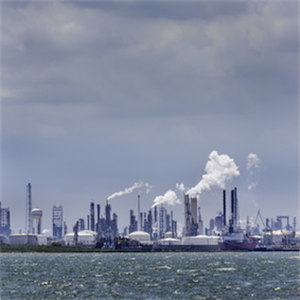
The main fossil fuel manufacturer countries lead to a wide range of oil, gas and coal plans that accumulate global climate commitments. A new report reveals the risk-based production policies of the Paris Climate Agreement targets of these countries. Paris Agreement aims to limit global temperature rise under 2 °C, with preferred 1.5 °C. For this, countries need to quickly reduce coal, oil and gas investments. However, the report reveals that the largest fossil fuel producers plan to further increase their production. Governments aim to produce approximately 120 percent of the required levels to adapt to the 1.5 °C limit up to 2030. Even the planned production according to the 2 °C target with more ‘corice’ is over 77 percent of the required.
Most countries keep fossil fuel dependent approach [
[[T]]Stockholm Environment Institute (SEI), Climate Analytics and International Institute for Sustainable Development (IISD) report; compares governments with coal, oil and gas production plans, Paris Agreement targets. Experts examined the 20 countries responsible for 80 percent of world fossil fuel production: Australia, Brazil, Canada, China, Colombia, Germany, India, Indonesia, Kazakhstan, Kuwait, Mexico, Nigeria, Norway, Qatar, Russia, Saudi Arabia, South Africa, United Arab Emirates, United Kingdom and USA. According to the last evaluation made in 2023, the production deficit was at 69 percent, while 110 percent for 1.5 °C limit. This difference in two years has grown even more. For 2030, coal production estimated 7 percent, gas production increased by 5 percent. From 2050, the total production required for 1.5 °C limit is 4.5 times, 2.5 times for 2 °C. From SEI US Center, Derik Broekhoff says, “Whether many countries have been committed to transition to clean energy, most still keep an approach of fossil fuel addicts.” [
[
Continuous and political support
Rapor shows that all countries continue to provide financial and political support for fossil fuel production. More than half of the countries plan to increase gas production seriously. Australia, Colombia, Indonesia and Kazakhstan does not offer clear plans on how to make this pass, if it sees gas as ‘transition fuel’. Six countries have identified more compatible strategies with global net-zero targets. When planning quick exit from Germany coal, China increases renewable energy investments at an unprecedented speed and reached 2030 solar and wind targets now. Colombia and Brazil also adopted energy conversion programs. However, these steps need to be adopted in the wider diameter. Emily Ghosh from Stockholm Environment Institute, “It is necessary to expand the innovations, exit from fossil fuels, manage energy demand and implement community-oriented energy conversions. Otherwise, the steps that are delayed will make additional emissions permanent and deepen the climate effects.
Most countries keep fossil fuel dependent approach [
[[T]]Stockholm Environment Institute (SEI), Climate Analytics and International Institute for Sustainable Development (IISD) report; compares governments with coal, oil and gas production plans, Paris Agreement targets. Experts examined the 20 countries responsible for 80 percent of world fossil fuel production: Australia, Brazil, Canada, China, Colombia, Germany, India, Indonesia, Kazakhstan, Kuwait, Mexico, Nigeria, Norway, Qatar, Russia, Saudi Arabia, South Africa, United Arab Emirates, United Kingdom and USA. According to the last evaluation made in 2023, the production deficit was at 69 percent, while 110 percent for 1.5 °C limit. This difference in two years has grown even more. For 2030, coal production estimated 7 percent, gas production increased by 5 percent. From 2050, the total production required for 1.5 °C limit is 4.5 times, 2.5 times for 2 °C. From SEI US Center, Derik Broekhoff says, “Whether many countries have been committed to transition to clean energy, most still keep an approach of fossil fuel addicts.” [
[
Continuous and political support
Rapor shows that all countries continue to provide financial and political support for fossil fuel production. More than half of the countries plan to increase gas production seriously. Australia, Colombia, Indonesia and Kazakhstan does not offer clear plans on how to make this pass, if it sees gas as ‘transition fuel’. Six countries have identified more compatible strategies with global net-zero targets. When planning quick exit from Germany coal, China increases renewable energy investments at an unprecedented speed and reached 2030 solar and wind targets now. Colombia and Brazil also adopted energy conversion programs. However, these steps need to be adopted in the wider diameter. Emily Ghosh from Stockholm Environment Institute, “It is necessary to expand the innovations, exit from fossil fuels, manage energy demand and implement community-oriented energy conversions. Otherwise, the steps that are delayed will make additional emissions permanent and deepen the climate effects.
Source: News