


Europe’s energy money
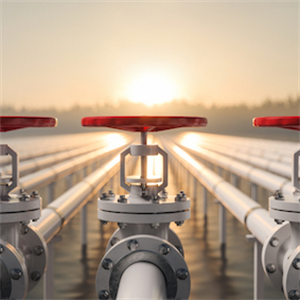
European-based non-governmental organization Fosil Beyond Fuels (Beyond Fossil Fuels) has released a new analysis that reveals the importance of exit from fossil fuels in energy sector and the goals of the current situation Paris Agreement (long-term retention of global temperature rise at 1.5 degrees Celsius). The analysis shows that the expansion plans in the gas plants of Europe create a serious contrast with the commitments of transition to a carbonless future of the continent.
The urgency of exit from fuels
Up to 2035, Europe’s electrical systems have a consensus that should be purified from fossil fuels. According to the International Energy Agency, this date is possible to reach the global warming of the Paris Agreement by completely carbonated the energy systems of European countries. This process requires a complete termination of coal usage up to 2030 of the continent and a transition to a electrical system based entirely on renewable energy sources within ten years. [
12 have commitment to European country
]
According to the published analysis, the 12 European country’s commitment to removing fossil fuels from electrical systems to 2035 is clearly roofed with the expansion plans of the gas industry. While there is no retirement plan for 98 percent of the current natural gas plant capacity of Europe, 72 gigavatity new plant installation plan shows that the gas plant capacity of the continent will increase 27 percent in the next 10 years. Countries such as Italy, United Kingdom and Germany stand out in terms of current and planned gas power plant capacity. These countries are also among those who sign G7 papers that are completely or mainly in the commitment to carbonization.
Constant steps for unconditional switch
Former Campaign Officer of Fosil Fuels Alexandru Mustata emphasizes that European countries need to remove fossil gas from energy systems until 2035 despite the expansion of the sector. According to Mustata, the industry’s plans do not match with climate change, the transition to renewable energy makes it costly and chaotic anywhere. The expansion plans of the European gas industry are weakening the climate crisis, as well as weakening energy safety and exposes the continent to variable electric prices. Mustata states that governments are forced to take stable steps to ensure a smooth transition to a fully renewable energy-based electrical system until 2035 by sending a clear message to the gas industry. This analysis shows that Europe’s energy future is in a critical semester and exit from fossil fuels is not only an environmental obligation but also an economic and social opportunity. In order to achieve the European carbonate targets, it is necessary to accelerate the transition from fossil fuels to renewable energy sources, and to support every level of this process.
Source: Energy